

Van insulation… welcome to the most controversial topic since the creation of #Vanlife! After years of passionate debate, Internet experts still can’t agree on the best insulation for DIY van conversions. Let’s hit pause on the emotional debate and do it our way: with theoretical analysis and real-life follow up.
Disclosure: This post contains affiliate links, which means that if you click a product link and buy anything from the merchant (Amazon, eBay, etc.) we will receive a commission fee. The price you pay remains the same, affiliate link or not.

Jumping to conclusion
After 2 winters of full-time Vanlife chasing the snow at temperatures as low as -22F (-30°C), and a few year of road tripping through Mexico (see our Mexico Vanlife Guide), USA, and Canada up to 95F (35°C), we recommend insulating your van with Thinsulate:
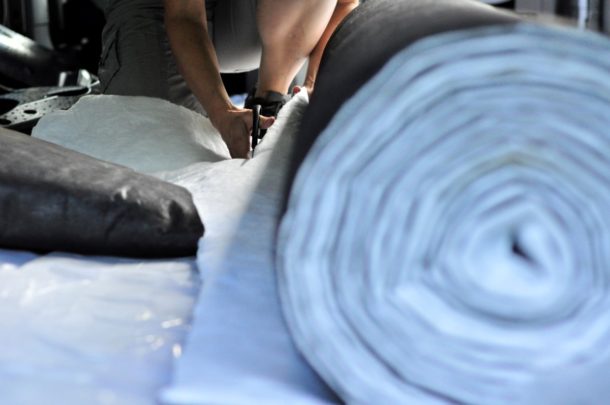
We used Thinsulate in FarOutVan 1, and using it again in FarOutVan 2. It has kept us warm, no mold, no bugs, since 2017. It’s SO easy to work with, and no chemicals are added (as a fire retardant or bug prevention). We and our van love it!
That being said: knowledge is power! Make your own conclusion about van conversion insulation by reading the whole thing below… 🙂
Theory
Heat transfer 101
The goal of adding insulation is to combat heat loss. Heat loss happens because of heat transfer (a.k.a. heat flow). Heat is always transferred from warm to cool, and it continues as long as there is a temperature difference; a larger temperature difference means greater heat transfer potential. There are 3 heat transfer mechanisms: Conduction, Radiation & Convection.

Conduction
Conduction is heat transfer through a material.
Examples:
- A pot handle (see picture above!)
- A spoon in a hot cup of tea
- A metal van surface getting hot inside the cargo area on a sunny day
Energy is stored in the vibration of atoms. More heat = more energy = more vibrations. The collision of atoms between each other transfers heat.
Insulating for conduction:
The more dense a material, the closer the atoms are from each other and the more they transfer energy to their adjacent atoms (by physically colliding with each other). Therefore:
Less dense materials are a better insulator for conduction.
Radiation
Radiation is heat transfer through electromagnetic waves.
Examples:
- The sun
- A Mr. Heater Buddy (there is some convection too but it’s mainly radiant)
- A van dash getting hot when exposed to the sun
Any hot (or warm) object radiates electromagnetic waves and can heat up other objects at distance (and therefore lose heat themselves). Energy is transferred through the electromagnetic waves, therefore, thermal radiation can happen through vacuum (without the presence of matter).
Insulating for radiation:
The more dense a material, the closer the atoms are from each other and the more they transfer energy to their adjacent atoms (by physically colliding with each other). Therefore:
A white shiny surface is poor at absorbing and radiating heat. It is, therefore, a good radiant barrier.
Convection
Convection is heat transfer through fluid (or gas) movement.
Examples:
- Hot air rising above an intense heat source (i.e. electric heater); Cold water falling towards the bottom of a lake
- A vehicle ventilation system (hot/cold air travels with the air being pushed by the fan)
Heat is “transported” from one part of a fluid (or gas) to another by the bulk movement of the fluid itself. Hot regions are less dense, so they tend to rise and are replaced by cooler fluid from above.
Insulating for convection:
The more dense a material, the closer the atoms are from each other and the more they transfer energy to their adjacent atoms (by physically colliding with each other). Therefore:
Insulating hollow structure (i.e. frames) and eliminating air gaps minimizes air movement and reduces heat loss through convection.
While heat transfer can be separated in to 3 separate mechanisms, heat loss normally implies all 3 of them together. For example, a hot cup of coffee:
- Heat is transferred from the liquid to the cup surfaces (conduction + convection from the circulation),
- From the cup to the air and objects nearby (convection+radiation),
- From the cup to the cold table underneath (conduction),
- Blowing on coffee to cool it down (convection).
- (Heat is also lost through evaporation -change of phase-, but that’s out of our scope).
R-Value
Insulation materials are good at resisting heat flow. To quantify how good an insulating material is and to allow easy comparisons between them, a neat dude came up with R-value.
R-value denotes the capacity of an insulating material to resist heat flow. The higher the R-value, the greater the insulating power. It is normally noted (for example) “6.5 per inch“, which means applying one inch thickness of the material will provide 6.5 R-value; applying two inches will provide 13.0 R-value; and so on. R-value takes into account all three heat transfer mechanisms (conduction, radiation, convection). R-value is determined with the ASTM C518 test (“Standard Test Method for Steady-State Thermal Transmission Properties by Means of the Heat Flow Meter Apparatus”).
Condensation and moisture control
Vapor Barrier or not?
The purpose of a vapor barrier is to prevent moist air (from inside the van) from migrating towards cold surfaces. The idea is that moist air from respiration, cooking, drying gear, etc. won’t reach cold surfaces, thereby eliminating condensation issues. However, if, for any reason, moist air makes its way past the vapor barrier, it would be very hard to dry that moist air because it would be sandwiched between two vapor barrier layers (remember that metal is a vapor barrier too).
Even if one could achieve the perfect vapor barrier (which is unlikely, sorry), there are paths for outside air (charged with moisture) to infiltrate, and there are potential leak points as well:

Therefore, we believe that moist air will inevitably come in contact with cold structure, so our approach is to let the insulation layers “breathe” (no vapor barrier).
Condensation and moisture is quite complex, there is much more to talk about… we think this article should help you understand the phenomenon and help you make a better informed decision about your insulation:
Thermal bridges
A thermal bridge is a path of least resistance for heat transfer. In other words, it’s a path for heat to “cheat” your insulation and find a way around it. It normally occurs via conduction through a dense material (such as metal).

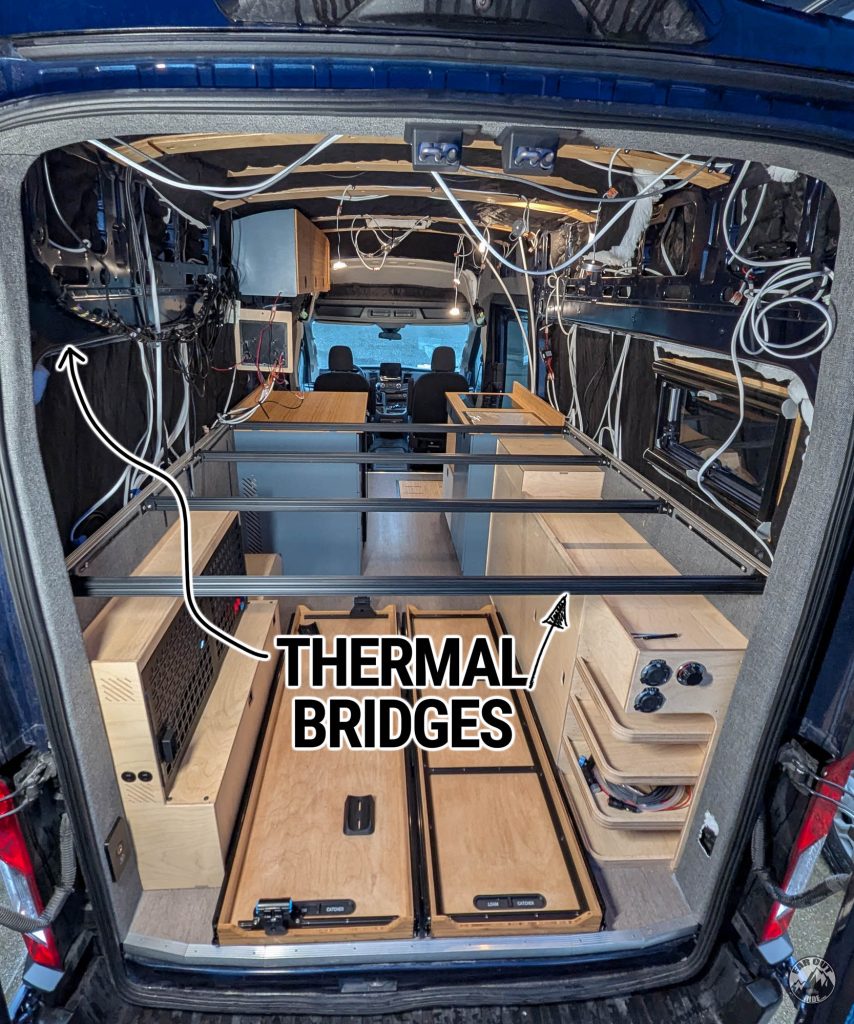
To mitigate the thermal bridges, a thermal break is added between the exposed metal and the cabinets. Because Thinsulate must be uncompressed to be effective (1.75in), using it as a thermal break is kind of a waste (of money and space). A denser, thinner material is preferred.
In FarOutVan 1, we bonded Low-E Insulation to most of the exposed metal:
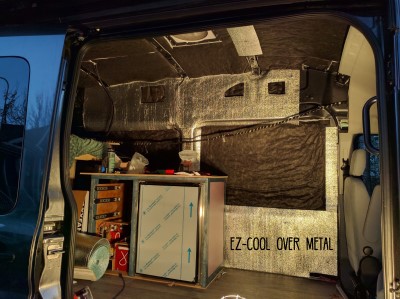
In FarOutVan 2, we bonded Landau Closed-Cell Foam to the back of the cabinets and wall panels (it’s the same foam that is used under the Upholstery):

In FarOutVan 2, we inserted nylon washers under the bolt’s head and on top of the rivet-nuts:

We also 3D printed TPU spacers that we inserted between the North-South frames (bare) and the crossbars (black):

Air Loops
Hot air is less dense, so it tends to rise and be replaced by cooler air from above. That’s called an air loop and it’s a phenomenon that happens in non-insulated, hollow structures, like in the frames and pillars. So, to the question: “Is it worth shoving insulation inside frames knowing heat will find a way around (thermal bridges)?” We think it’s worth it. The total heat loss of your van is the sum of all the small pieces and bits… It all adds up!


Insulation materials
At this point, we’re still on our quest to find THE BEST van insulation material… But in order to find out, let’s review our different options:
Our friends
Thinsulate
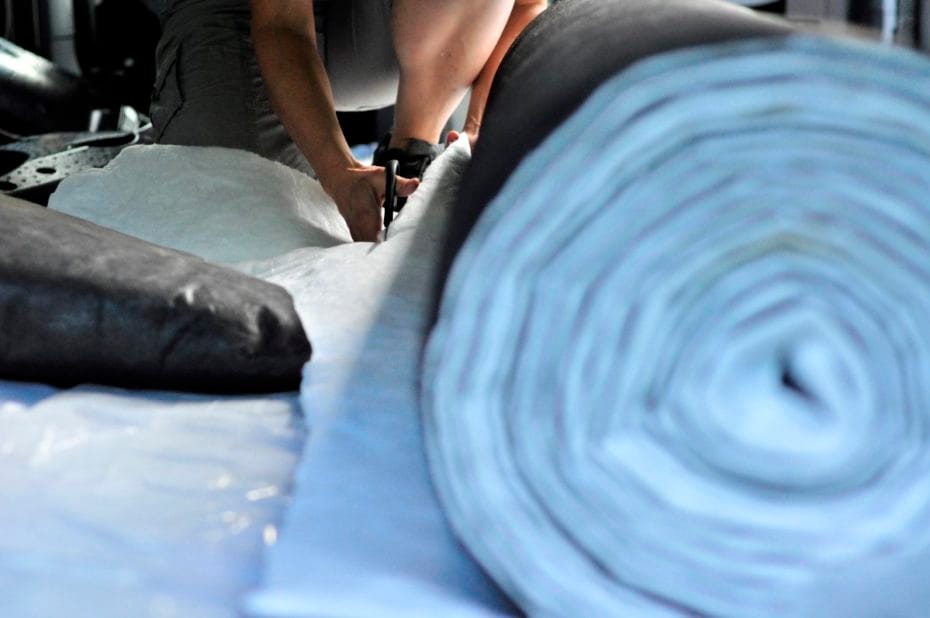
R-Value:
3.3 per inch.
- Very easy to install
- Hydrophobic (doesn’t retain moisture)
- Doesn’t off-gas
- Doesn’t lose fibers and not itchy
- Good noise insulation
- Can be stuffed in hard-to-reach places
- More expensive
Bottom line: it’s a popular tried-and-true product that gives an added value to higher-end builds.
Polyiso Rigid Board

R-Value:
5.6 per inch at 75F.
5.0 per inch at 15F.
- Impermeable to water vapor.
- R-value decreases substantially at cold temperature.
- Creates air gaps on funky surfaces (which is mostly the case in vans) = water traps.
XPS Rigid Board
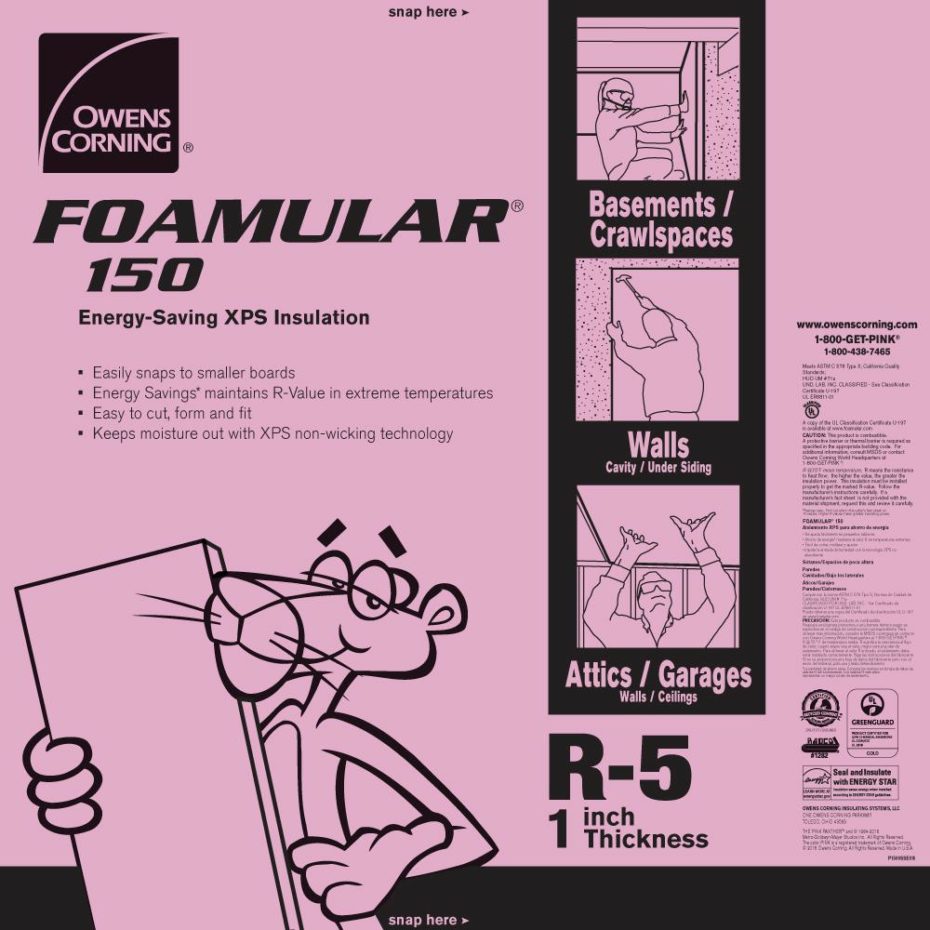
R-Value:
5.0 per inch at 75F.
6.0 per inch at 15F.
- Provides more reliable thermal performance than Polyiso.
- Impermeable to water vapor.
- Creates air gaps on funky surfaces (which is mostly the case in vans) = water traps.
- Maximum service temperature: 165F.
Spray Foam

R-Value:
6.5 per inch.
- Conforms to curved surfaces.
- Impermeable to water vapor.
- Can distort the van panels if applied in thick layers.
- Messy to apply.
- Will block mechanism if no precautions are taken (e.g. doors).
- Some body shops won’t do repairs if spray foam was applied.
Rockwool
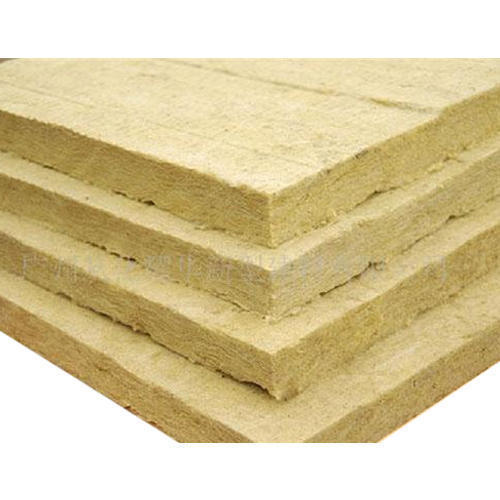
R-Value:
3.0 per inch.
- Easy to install
- Hydrophobic (doesn’t retain moisture)
- Doesn’t off-gas
- Itchy
- Can release fibers
Reflectix

R-Value:
R1.0 per inch.
By now, we know Reflectix is not an insulation material; it’s a radiant barrier and requires an air gap to work as intended.
It’s a cheap option to make your own window covers (to reflect the sun = radiant barrier), but we prefer LOW-E as it is more resistant to tears and doesn’t have that annoying foil noise.

From Heros to Zeros
Recycled denim
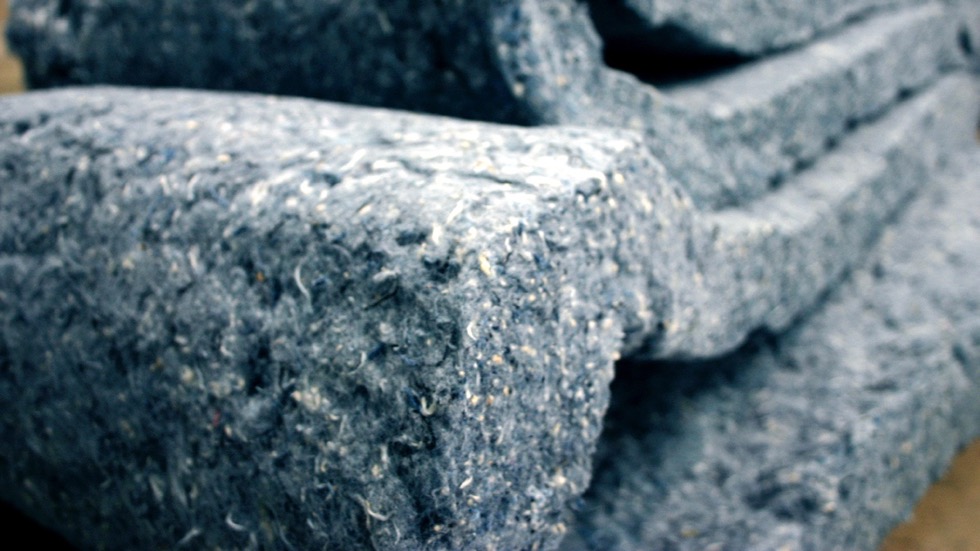
R-Value:
3.5 per inch.
Why we don’t recommend it
It’s hydrophilic: it absorbs and retains moisture. People sometimes attempt to enclose it in garbage bags only to find out later that the bags are torn and the insulation is soaked or moldy.
Fiberglass

R-Value:
3.2 per inch.
Why we don’t recommend it
It’s hydrophilic: it absorbs and retains moisture. People sometimes attempt to enclose it in garbage bags only to find out later that the bags are torn and the insulation is soaked or moldy.
Lizard Skin and other insulating paint
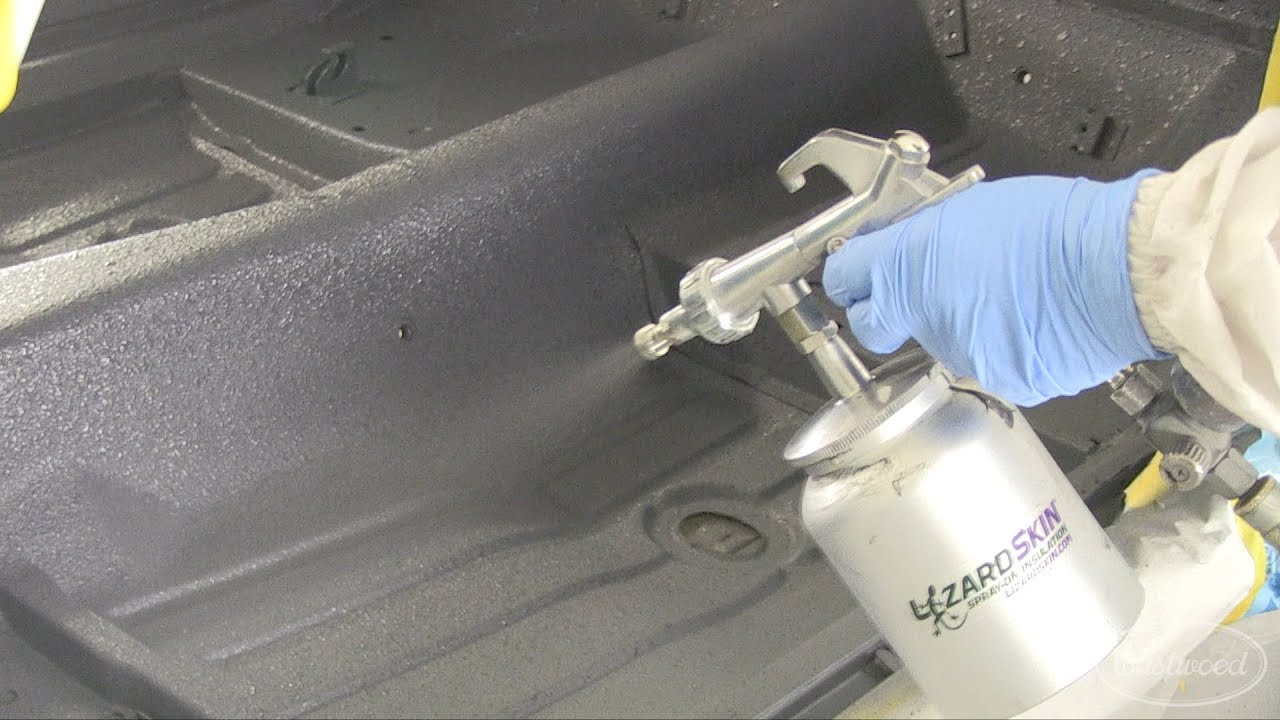
R-Value:
Negligible.
According to this Scientific American article, the EPA does not recommend insulating paint: “We haven’t seen any independent studies that can verify their insulating qualities”. They noted some heat gain reduction on surfaces directly exposed to sun only, and that “the reflectivity of the painted surfaces decline considerably with time”. It’s all about reflectivity, not insulation capacity. Are you really gonna paint the exterior or your van with insulating paint..?
Until independent studies show a benefit of insulating paint through standardized test, save your money and your time.
Our insulation strategy
Going from theory to real-life implies making compromises; there is no perfect solution! The best vanlife insulation is not just about R-Value, it’s also about:
- Ease of installation for the average DIYer
- Risk of messing things up (i.e. warped van panels)
- Condensation and moisture control
- Conformity to curved and uneven surfaces
- Material properties (i.e. maximum temperature, resistance to pressure)
With that in mind, here is how we insulated our campervans:
Floor
XPS rigid board
To be efficient, any compressible insulation material (thinsulate, wool, etc.) must be fully expanded. As a result, they’re not ideal for floor insulation. On the other hand, XPS is an excellent insulator, provides a solid and flat foundation for our floor, is quite cheap, and is readily available at your local hardware store.
So, does it work in real-life? Definitely! We installed our Webasto so that it blows hot air into our living space near and parallel to the floor. As a result, the floor is nice and warm, even in sub-freezing temperatures. But don’t get us wrong: the farther you go from the Webasto, the colder the floor gets. Cold air falls, remember? So even a perfectly insulated floor won’t be nice and warm everywhere unless it’s heated. No, we don’t think a radiant-heated floor is necessary (though it could be a nice luxury); a pair of slippers is just fine and much more energy-efficient!
FarOutVan 1 floor installation:
FarOutVan 2 floor installation:
Walls, ceiling, overhead cabin & sliding door
Main insulation: Thinsulate
Installing Thinsulate insulation in a DIY conversion is a piece of cake: there’s no mess, no risk of messing things up, it’s not permanent, and it’s easy to work with. You’ll be all done in a weekend. Here is how it goes:
- Cut Thinsulate to size (using tailor scissors)
- Apply 3M 90 spray adhesive to the van wall and on the white face of the Thinsulate
- Wait 30-60 seconds for the adhesive to become tacky
- Press the Thinsulate against the wall
- That’s all!
How does it perform in real-life? Since we moved full-time in our van (2017), we’ve had everything between -22F (-30°C) and +95F (+35°C), and we’re in a good position to say it’s a tried-and-true van insulation material. If we had to build another van, we’d use Thinsulate insulation again without any hesitation.


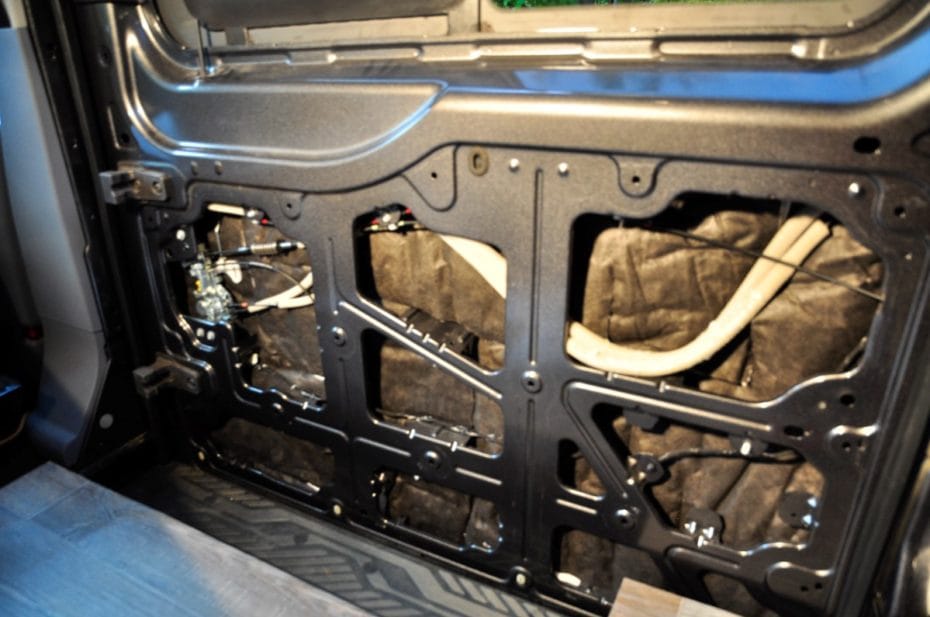
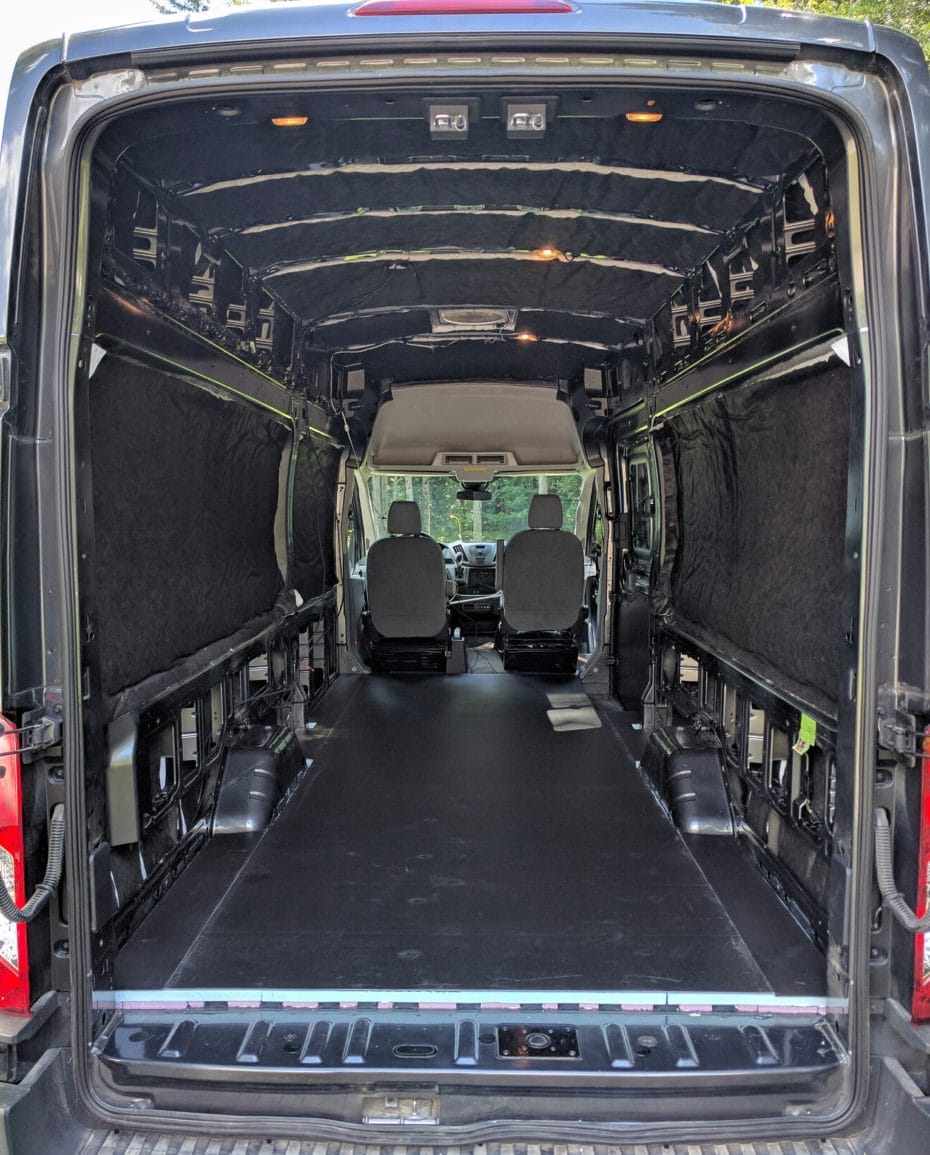
FarOutVan 1 Thinsulate installation:
FarOutVan 2 Thinsulate installation:
Thermal breaks: Low-E or Landau foam
In FarOutVan 1, we covered the exposed metal (and more) with Low-E insulation:
In FarOutVan 2, we covered the back of the cabinets and wall panels with Landau Closed-Cell Foam. It’s documented in each respective Build Journal Entries:
Windows
Insulated window covers
You can spend a lot of money and time on the best insulation, but remember that glass is an excellent heat conductor (in other words, a horrible insulator). You can make cheap & dirty Reflectix covers to reflect the sun in summer, but if you are skiers like us, you will want something that performs better… Insulated window covers make a HUGE difference in sub-freezing temperatures, and they’re just plain essential below 5F (-15°C):
On second thought
We’re super happy with FarOutVan 1’s insulation, so much that we are doing the SAME for FarOutVan 2! We actually use Landau instead of Low-E for thermal breaks, but both solutions work just fine.
You might be interested in
Putting our insulation to the test!




Hi
Great article!
I produce alpaca fiber and plan to use it raw, ( not processed into batts) to insulate my barn. I recently had someone respond to an ad I had to sell raw wall and they’d like to use it to insulate their van. They are looking for about 80 ft.² and I’m wondering approximately how much fiber you think they might need in pounds.? Any ideas on how to calculate?
Hi guys. Great article that I wish I’d found earlier. Question: I already have reflectix and polysio attached to some hollow areas and it aint coming off (used some pretty robust adhesive). In theory, could I put thinsulate over these sections and expect similar results? Or, will the excessive insulation just make things worse?
Thanks!
Hi Nick,
Insulation should in principle just add up. So the only downside could be, that the insulation becomes too bulky, but as you only shoved it into hollow areas I guess this does not apply to you.
So it should be alright and probably even better this way 🙂
Hello. Question. I want to not put the 1/2 insulation in the low spots on the floor to allow a little ventilation for when moisture somehow makes it’s way down there. Given that the xps foam will then just rest on the high spots and not be supported in the low spots, do you think i need to add a plywood layer so the xps does not compress on the ribs? Thanks in advance
Hi there, great site! I was wondering whether you would be so kind to share your thougts on the use of Armaflex for insulation. Here in Europe the most concensus is on the use of Armaflex turning every van inside deep black 🙂 Years ago we traveled the Panamericana with a Westfalia VW T4 syncro van without any additional insulation and even survived -23 celsius in Bolivia. Nevertheless in our new bus we like the best insulation. Happy trails ans thx for your time!
LOVE your site, what an incredible resource! I’ve just purchased a cargo van and am starting the build, so will be using/purchasing your various guides, plans and advice. For the flooring, Im having tough time locating local minicell closed foam retailers in Southern Cal (Home Depot has other brands, but hoping to stay the course with your recommendations where possible.
Any advice on where to find/purchase?
I have honestly no idea where you can source it locally, is there a problem with having it shipped from here?
Finally a site that makes sense 🙂 I’m embarking on my 1st build about to start with the floor, I have a transit custom, could suggest a way of insulating the floor without raising it so high?
I don’t have a poptop and height is a premium.
Thanks
Yep, check out this article: https://faroutride.com/floor-installation/
🙂
Very interesting site
Im in the process of insulating my van and im thinking about using sheep wool, acccording to comments its a bit difficult to set up, but i have got an idea of using steel wire mesh to sandwich in between two layers of the stuff which I will sew or glue on to , what is your prized opinion on this scheme
Love all the details and help and insight! I believe I read “somewhere” in your posts on insulation that more than 1 layer of Thinsulate is not helpful, and that you may have explained the rationale for why re leaving some dead air space between the Thinsulate and vapor barrier…but I can’t find that content any longer…can you point me to the page where that content is, or possibly give a quick reprise…it seems like several people have similar questions re the value of a second layer of Thinsulate in some of the deeper inset areas of the van.
Thanks in advance!
It is obvious that your choices have been excellent for your lifestyle but just how necessary is the insulation for those of us who do not want to camp out in temperatures lower than (say) 10 degrees Celsius?
Insulation also works for hot temperatures. Personally I wouldn’t skip it…
Hi Guys,
I understand you did not use any other sound dampening besides Thinsulate. What about the interior of the wheel wells?
Also, After trying this setup for several months, do you think EZ-Cool was a good choice or would you let that go in a future build?
Thanks so much for all the valuable info.
I have exactly the same question. how is the sound inside the van while driving? do you recommend to use sound dampening?
I am just starting my Van Build. I noticed while driving my van across the country after buying it that there were speeds and road surfaces that would create a loud hum on the sheet metal. I decided to use Kilmat sound deadening which is self adhering and you roll it to make it attach the best. Now my van does NOT hum. I can “knock” on the sheet metal where I have Kilmat and where I do not – big difference. You don’t have to cover the van, just 50% of each area of sheet metal that lacks support for more then a foot. Also I will do the wheel wells. when pebbles hot the wheel wells they sound like bullets now. I will add a bit to the ceiling and some to the doors.
Hi,
We covered the wheel well with Thinsulate as well (interior). Once the van is all insulated, finished and furnished, it is quiet. Our opinion is that adding sound dampening is not necessary; we wouldn’t do it if we had to start over.
We’d probably do EZ-Cool again!
I cannot find the air bag disengage video. Could you please send a link?
This site is the greatest and the word is being passed how great you guys are!
Dave
My 144 feels warmer and cooler already. I still want to add rigid insulation under the floor and on the roof with a membrane type roofing material. I need all the height inside the coach
Hello! Incredible job with the build-out and with your documentation of the entire process. This has been a wonderful resource!
Did you end up insultating the rear doors? Or just the window coverings?
Many thanks… John
Two years into our trip (after two winters), we finally trow some thinsulate in there. All we did is remove the plastic cover by pulling on it (with the speaker cutout) and add Thinsulate.
salut à vous,
je suis à terminer l’isolation de mon transit (148 ext) avec 70 pieds de thinsulate et il va m’en manquer…
Je n’ai aucune perte (environ 1 pied linéaire) et il me manquera environ 10 pieds linéaires minimum pour terminer le plafond et la porte coulissante et je n’ai même pas fait l’intérieur du montant horizontal sur lequel est fixée la couette de fils qui se rend à l’arrière. En plus j’ai 2 fenêtres (coulissante et arrière conducteur) et 1 autre petite en arrière. Dans votre construction, aviez vous isolé tout le bas incluant le garage? J’en suis à me demander si j’ai bien reçu 70 pieds de thinsulate (évidemment, je ne l’ai pas déroulé pour le mesurer!). Votre avis? j’ai reçu le mauvais format ou c’est normal d’être short et je devrai m’acheter ce qu’il me manque? Merci à vous et merci pour votre site qui est une mine d’or.
Hi Isabelle and Antoine!
I’m new in this camper van genre and at the moment I’m doing research about insulation. I pretty much agree with your point of view and will mostly do our vans insulation as you have done yours. My only problem is that I can not get Thinsulate from Finland and at the moment the sheepwool is also not available. What I think is the closest product to them (that is available) is flax insulation so I would like to ask if you guys have ever thought that as an option and what is your opinion about it?
Example of the product I could get is this http://www.isolina.com/gb/insulation.cfm
I would really appreciate your opinion about flax and hope you have time to answer for me.
Thanks!
Hi!
Maybe you mentioned it and I missed it, but what size should I buy for my thinsulate if I have the same van size as you guys & I intend to do the windows too?
Thank you 🙂
Hi! It’s mentioned in these articles:
– https://faroutride.com/thinsulate/
– https://faroutride.com/insulated-window-covers/
Have fun! 🙂
Wow thanks, I think you just saved me a big headache by switching to thinsulate over spray foam or foam board for my walls (mine are straight walls, cargo trailer).
I never would have guessed one layer of thinsulate would be sufficient for subzero temps. You really wouldn’t recommend 2 layers then?
Thanks!
Bonjour!
Super site, je suis d’accord avec tous les concepts dans cette page. Je comprends que l’isolation au thinsulate s’est avéré un bon choix pour vous puisque le concept fonctionne. Maintenant, je m’apprête à faire une conversion et je lis plein de choses contre l’isolation à l’uréthane mais toujours basé sur des hypothèses. Je me demandais si vous aviez rencontré (ou vu des témoignages vidéos) de gens qui avaient réellement vécu les problèmes dont tout le monde parle pour l’isolation à l’uréthane gyclé (Rouille, déformation tôle, etc)?
Pour la déformation de tôle, oui, on a rencontré des gens avec le problème. La déformation est quand même subtile. On a aussi rencontré beaucoup de gens qui ont isolé à l’uréthane sans problème…
Pour la rouille, c’est un problème qui apparaît après de longues années et il faudrait aussi que la personne enlève l’uréthane pour aller constater les dégats, alors on a pas rencontré personne ayant rapporté le problème. Par contre, on a rencontré plusieurs personnes ayant rapporté des fuites mineures…
Maybe I am missing it, But what are you using for sound dampening, is it just the thinsulate ?
Thanks for your blog here… very inspiring
Yep, Thinsulate is an excellent sound insulation; no need to go crazy on multiple layers 🙂
thx!! seems too simple! lol
Hi guys,
Here admiring your masterpiece for a long time now and I am finally taking steps towards this dream.
What is your best advice for insulating for hot weather? I keep reading that insulation for hot weather is futile as it is only delaying heating up of the interior by 1 or 2 hours in the afternoon and that is it. Any advice?
Love and admiration..
The insulation strategy is the same (Thinsulate for us), but window covers are very important too. You can buy pre-made ones or make your own: https://faroutride.com/insulated-window-covers/
You should prioritize a light-colored van if chasing the sun is what you’re after!
Cheers!