This article originally appeared in Boeing’s Aero Magazine (Aero No. 5, 1999). The original source is no longer available on Boeing’s website. A copy can still be viewed on the web.archive.org. Below is a summary and commentary on the key findings. This summary complements our guide: Condensation in vans: Why it happens and how to control it
Why Moisture Is a Problem in Aircraft
Commercial aircraft cabins contain significant moisture generated by:
- Passengers breathing and perspiring
- Galley operations
- Lavatories
- Outside humid air introduced by ventilation
At cruise altitude:
- Outside air temperature ≈ –40°C to –60°C
- Cabin air ≈ 20–24°C
This creates a large temperature gradient across the fuselage skin.
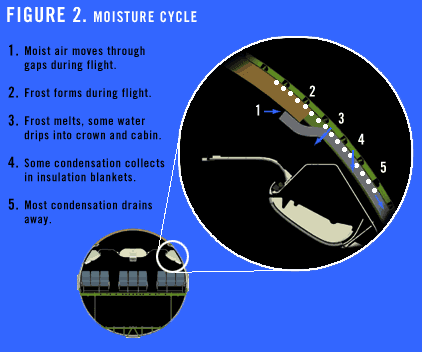
When warm, moist cabin air reaches the cold inner skin of the aircraft:
→ Condensation forms.
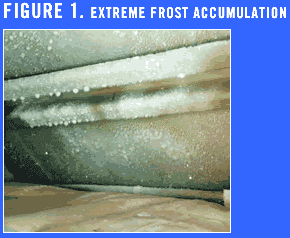
Where the Moisture Goes
Condensation typically accumulates:
- On the inner fuselage skin
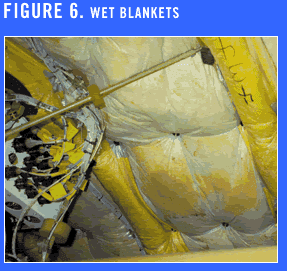
- Inside insulation blankets
- In structural cavities
- Along frames and stringers
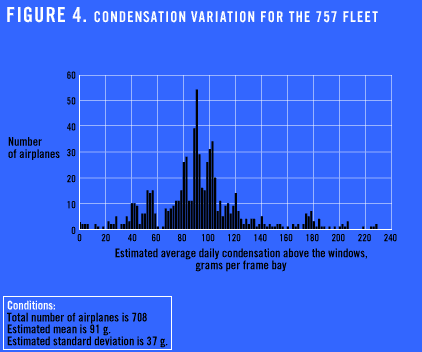
In some aircraft types, several gallons of water per flight can accumulate.
This water may:
- Drip into the cabin
- Freeze at altitude
- Thaw during descent
- Promote corrosion
- Increase insulation weight
Why It’s Called “Nuisance” Moisture
The issue is not catastrophic structural failure.
It’s operational and maintenance problems:
- Water dripping on passengers
- Wet insulation blankets
- Increased corrosion risk
- Ice accumulation
- Electrical equipment exposure
Over time, trapped moisture adds:
- Weight
- Maintenance cost
- Inspection burden
The Physics Behind It
The article explains basic moisture principles.
Absolute Humidity
Amount of water vapor in air.
Relative Humidity (RH)
How close air is to saturation at a given temperature.
Dew Point
Temperature at which condensation occurs.
As cabin air cools near the fuselage skin:
- Relative humidity increases
- Once it reaches 100%, condensation forms
Because the fuselage skin is extremely cold at altitude, condensation is unavoidable.
The key is management, not elimination.
Why Insulation Makes It Worse
Aircraft use insulation blankets for:
- Thermal control
- Noise reduction
However:
- Warm humid air migrates through insulation
- Condenses at the cold skin
- Water becomes trapped inside blankets
Once wet:
- Drying is slow
- Insulation loses effectiveness
- Added weight increases fuel burn
Boeing’s Design Objectives
The article outlines five goals for moisture control systems:
- Minimize condensation formation
- Minimize water dripping
- Promote drainage
- Maximize drying between flights
- Prevent water accumulation in insulation
They do not attempt to eliminate moisture — only to manage it.
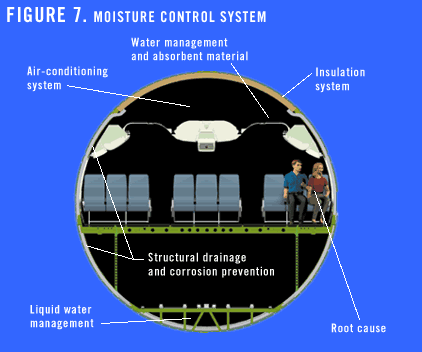
Moisture Control Strategies
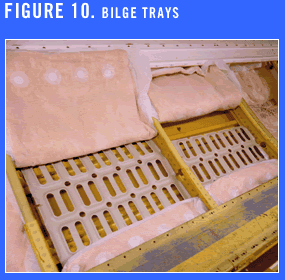
Improved Drainage
- Drain holes in lower fuselage areas
- Water channeling paths
- Sloped surfaces to encourage runoff
Vapor Barriers
- Reduce cabin air migration into insulation
- Control airflow pathways
Controlled Ventilation
- Promote airflow behind sidewalls
- Dry insulation during turnaround
Insulation Improvements
- Materials that resist water absorption
- Better blanket sealing
System-Level Optimization
Moisture control must balance:
- Weight
- Energy consumption
- Cost
- Complexity
Key Insight from the Article
Condensation inside aircraft is:
- Inevitable
- Physics-driven
- Present in all pressurized aircraft
The engineering challenge is:
Design the structure so water can form, drain, and dry without causing damage.
The solution is not perfect vapor sealing — it is controlled moisture management.
Relevance Beyond Aircraft
Although written for commercial airplanes, the principles apply to:
- Vans
- RVs
- Boats
- Metal buildings
- Cold-climate structures
Any system with:
- Warm humid interior air
- Cold exterior skin
- Insulation cavities
Will experience condensation.
The real questions become:
- Can moisture drain?
- Can it dry?
- Is it trapped?
Continued