Now that FarOutVan #2 is on operational, van #1 spends more time in the driveway than it deserves. So it’s time: we’re looking for its next owner.
And because it’s us, you’re not just getting a camper van — you’re getting the manual. Every step of this conversion is documented in the Build Journal: what we installed, how, and why. We believe it’s one of the most documented camper vans out there.



Quick Facts
| Vehicle | 2016 Ford Transit — Extended Length, High Roof (148″ WB) |
| Engine | 3.7L Ti-VCT V6 (gas) | RWD | 4.10 limited-slip differential |
| Odometer | 168,500 km |
| Mechanical | No known issues, maintained on schedule |
| Asking price | CA$74,900 |
| Location | Squamish, BC |
The Build
Here are the highlights; each system has its own detailed entry in the Build Journal, and you can see it all in motion in the Van Tour.
Electrical
- 200Ah lithium battery bank (installed in 2021)
- 320W solar (2 × 160W) with Victron SmartSolar MPPT
- Victron Orion XS DC-DC alternator charging (50A)
- 1,000W inverter
- 380W shore power charger
- Simarine Pico digital monitoring
The system was designed from our real consumption data, and the complete design is public in our Electrical System Guide.
Heat & Climate
- Webasto Air Top 2000 heater (runs on gasoline from the van’s own tank)
- Propex HS2000 propane heater as a fully independent backup
- 3M Thinsulate insulation with Low-E thermal breaks
- Maxxfan roof fan
This van kept us warm through winters down to -30°C. Two independent heat sources is our idea of sleeping well.
[PHOTO — interior, living area looking toward the bed]
Water
- 25 gallon fresh tank, 7 gallon grey tank
- Pressurized water at the sink (Shurflo pump)
- Hot exterior shower (Eccotemp L5, propane)
Full details in the Water System Guide.
Propane
- 5 gallon tank in a sealed & vented locker (about 1-2 months of autonomy)
- Remote tank level sensor, smoke & CO alarm
Design and installation are covered in the Propane System Guide.
Kitchen
- Atwood Vision propane range — with a real oven
- Novakool R5810 12V fridge
- Deep Dometic sink with swivel faucet
- Large countertop (we cooked in this van almost every day — it matters)
Bedroom, Bathroom & Garage
- Fixed platform bed — no daily setup, ever
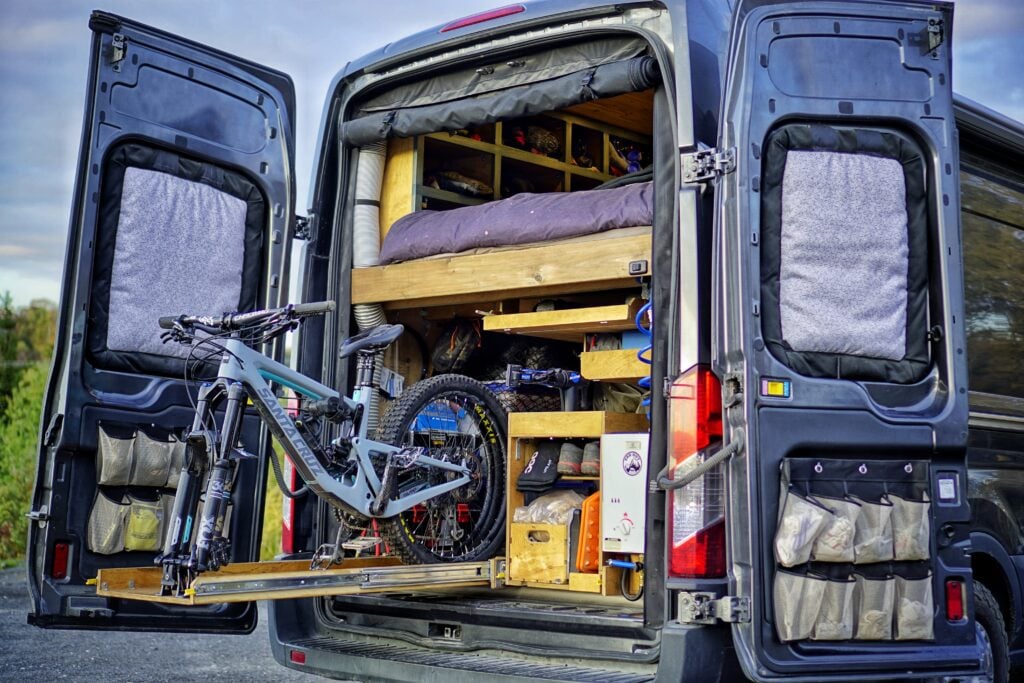
- Garage fits two mountain bikes on a slide-out rack
- Nature’s Head composting toilet (no black tank)
- Organized storage: overhead cabinets and bedroom storage cubes
Exterior & Driving
- Fiamma F45 awning
- Bug screens on sliding and rear doors
- BFGoodrich KO2 all-terrain tires with TPMS
- Air Lift 5000 rear suspension with on-board compressor (level the van for the night from the remote)
- Scopema swivel seats, driver and passenger
- Pioneer head unit with Apple CarPlay / Android Auto, upgraded speakers
Why Are We Selling?
We built FarOutVan #2, and two vans for two people is one van too many. Van #1 deserves more trailheads than our driveway can offer.
Buying from the USA
The van can absolutely cross the border, and it has a head start: it was assembled in Kansas City, Missouri, and Ford will confirm in writing that it met all US federal safety and emissions standards the day it left the factory. To be upfront, the import is the buyer’s project, not ours — but it’s a well-worn path, and here’s the map:
- Gather the paperwork (we handle this part). You get a lien-free bill of sale, the signed-over BC registration, and a free VIN-specific compliance letter from Ford. We’ll request the letter as soon as the sale is agreed.
- Duty: 2.5% (about US$1,300). The van is a product of the United States, and CBP’s own FAQ states US products are not subject to the 25% auto tariff — the 2026 tariffs on Canada apply only to products of Canada. What applies is the ordinary 2.5% base rate on the sale price, about US$1,300. No broker is required for a personal import (you can self-clear at the border), though one is worth a few hundred dollars to confirm the numbers for your crossing date and prep the entry.
- Fill out two federal forms. DOT form HS-7 (safety) and EPA form 3520-1 (emissions). With the Ford letter in hand, both are checkbox exercises.
- Fly in, pick it up, drive it home. Squamish is about an hour from Vancouver’s airport (YVR). We’ll go with you to an ICBC Autoplan broker for short-term insurance and a permit for the drive to the border; at the crossing, declare the vehicle, hand CBP the paperwork, and get the forms stamped. The drive home starts on the Sea-to-Sky Highway, which is not a bad way to meet your new van.
- Register it in your state. With the stamped CBP paperwork, the van titles like any other out-of-state vehicle. The conversion doesn’t complicate the federal side (compliance is judged on the van as Ford built it), but check your state’s inspection routine and line up insurance ahead of time — some insurers want an RV appraisal before covering a DIY conversion.
If it helps: this van has already crossed the US border more times than we can count. The only difference this time is that it wouldn’t come back.
Price, Viewing & Contact
Asking CA$74,900 (or best offer). The van is in Squamish, BC. We’ll happily walk you through every system.
We hope it ends up with someone who fills its GPS history with as many trailheads as we did.
— Isabelle & Antoine