Figuring out how to handle bathroom needs is one of the first questions people ask — and one of the most important decisions in any van build.
This guide covers everything: whether you need a toilet at all, how the different types work, how to pick the right one for your situation, and which specific models are worth considering.
Do You Actually Need a Toilet in Your Van?
Our answer: it depends on how you travel.
Plenty of full-time van lifers go years without a dedicated toilet, relying instead on campground facilities, rest stops, gyms, and coffee shops. If most nights are spent at campgrounds or in cities, a toilet might not be absolutely necessary.
That said, a toilet becomes much more compelling if any of these apply:
- Spending multiple nights in remote locations without facilities
- Traveling as a couple or with others (more urgency, less flexibility)
- Living or working from the van full-time
- Traveling in regions where public facilities are scarce or unreliable
- Wanting to park and sleep anywhere without worrying about bathroom access
The bottom line: a toilet adds freedom. Whether that freedom is worth the cost and space is a personal call.
Our Pick
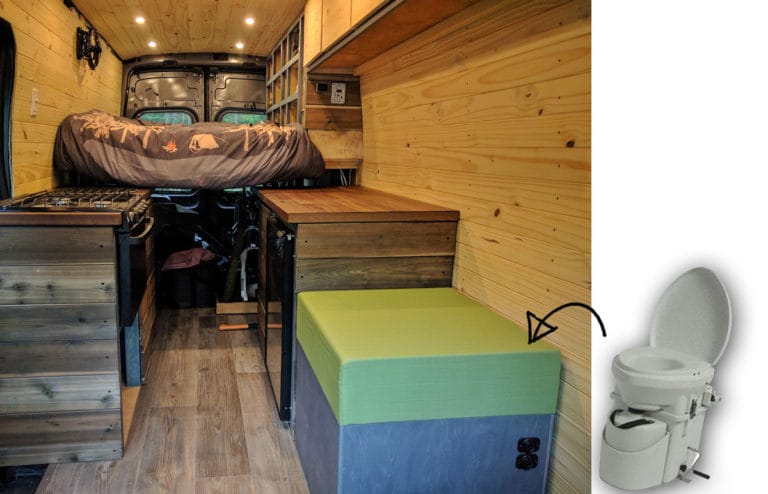
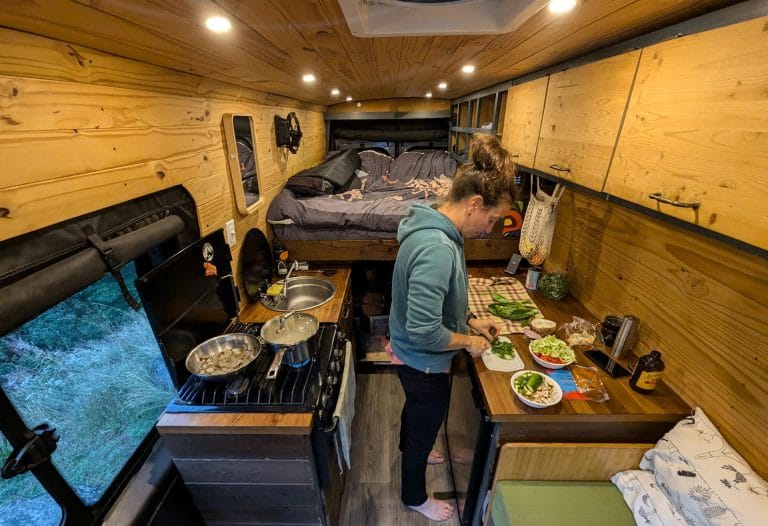
We lived full time in FarOutVan #1 for over 5 years, with a Nature’s Head Composting Toilet, and we personally absolutely want a toilet in our van. It gives us the flexibility of sleeping anywhere without having to plan ahead for bathroom access.
We spent some time with full-timers who didn’t have a toilet, and while they made it work, we had to plan ahead for bathroom access and leave our camp early to get to one…
Toilet Types Overview
Composting / Separating Toilets

Most people’s biggest fear with a van toilet is smell. The good news: odor is almost entirely a solved problem — as long as you understand what causes it.
The smell associated with toilets comes from one thing: urine and solid waste mixing together. That reaction produces ammonia and hydrogen sulfide — the gases responsible for that unmistakable sewage odor.
The solution is separation. Keep liquids and solids apart, and the smell problem largely disappears. This is why urine-diverting designs have become the standard in van life — and why old-school “bucket with a lid” setups smell bad by comparison.
Composting toilets separate urine from solid waste using a built-in diverter. Liquids drain into a removable bottle, while solids fall into a separate compartment lined with a bag or filled with a composting medium like coconut coir. Keeping the two apart is what prevents the sewage smell — that odor only happens when solids and liquids mix.

Depending on the model, solids are either:
Layered
A scoop of medium is added after each use, and the bag is emptied when full (simpler, more frequent emptying)
Agitated
A hand crank or electric motor mixes the waste with the medium, accelerating breakdown and extending time between empties
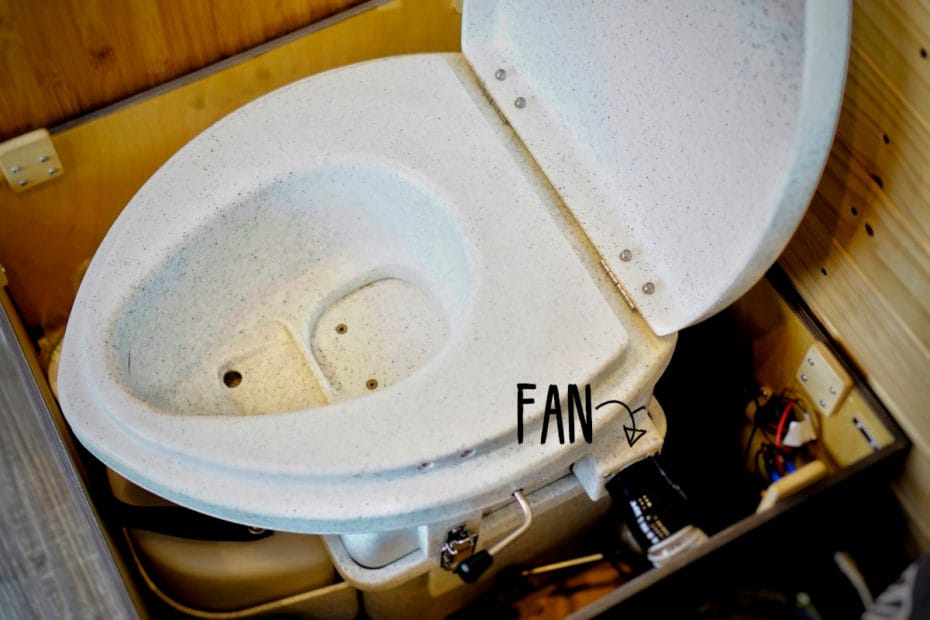
Most fan-equipped models vent moisture and odor outside the van through a small hose. Some compact models skip the fan entirely and rely on frequent emptying instead.
Pros
- No chemicals required
- No black tank, no dump station
- Liquids can be emptied anywhere (toilet, grey water, or responsibly in nature)
- Solids go in a regular trash bag
- Odor-free when used correctly
- Most are portable — no permanent installation required
Cons
- Higher upfront cost
- Requires some learning to use correctly
- Liquids need emptying every 2–4 days
- Solids need emptying every 1–4 weeks depending on model and usage
- Fan-equipped models need a 12V power source
Best for: Full-time van lifers, extended off-grid trips, anyone who wants to avoid dump stations entirely.
Price range: $175 – $1,200 USD
Cassette Toilets
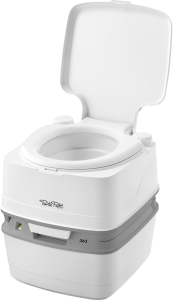
A cassette toilet has a small fresh water tank on top for flushing, and a removable sealed waste cassette (tank) below. When the cassette is full — typically after 15–20 uses — it detaches and gets carried to a dump station to empty and rinse.
Most cassette toilets use chemical treatment tablets or liquid to break down waste and control odor inside the tank.
Pros
- Familiar to use — closest to a regular toilet
- No special technique or medium required
- Sealed system means no odor during use
- Compact and affordable
Cons
- Requires chemical additives
- Dependent on cassette dump stations
- Emptying is unpleasant
- Not great for true off-grid travel
Best for: Part-time travelers and weekend warriors who stick to campgrounds and RV parks.
Price range: $80 – $350 USD
Bucket / Bag Toilets
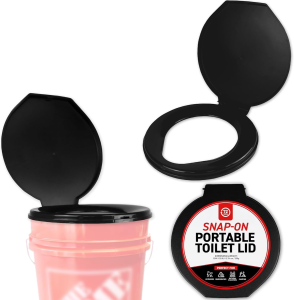
Bucket toilets are exactly what they sound like — a sturdy bucket with a fitted seat lid, lined with a heavy-duty bag. After each use, a scoop of cat litter, sawdust, or coconut coir gets added to absorb moisture and control odor. When the bag is full, it ties off and goes in the trash.
Some van lifers DIY their own from a 5-gallon bucket and a snap-on seat. Others use a urine-diverting version that separates liquids from solids, functioning similarly to a composting toilet at a fraction of the price.
Pros
- Extremely affordable (DIY under $30)
- No power, no installation
- Works anywhere
Cons
- Least comfortable and least discreet
- Odor control relies entirely on the medium and emptying frequency
- Not practical for full-time use
Best for: Budget builds, backup use, or a temporary solution during the build phase.
Price range: $20 – $50 USD
Dry Flush Toilets
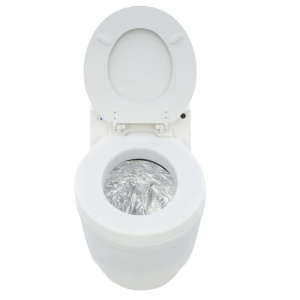
Dry flush toilets work like an automatic waste-sealing machine. After each use, a button press activates a mechanism that wraps the waste in a mylar liner and seals it — similar to a diaper pail. No water, no chemicals, no medium needed.
Each cartridge holds approximately 15 uses before being swapped out and thrown in the trash.
Pros
- Zero technique required
- Completely odor-free
- No venting or power hookup needed (rechargeable battery)
- Great for shared or rental vans
Cons
- High ongoing cost (~$1+ per use)
- Not eco-friendly — generates plastic waste with every cartridge
- Not practical for full-time use
Best for: Part-time travelers who prioritize convenience, or vans used by guests/renters.
Price range: $1,000 – $1,300 USD for the unit + $15–$20 per cartridge
Incineration Toilets
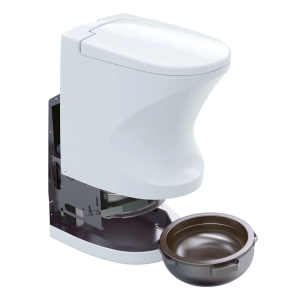
Incineration toilets burn waste to sterile ash — no water, no chemicals, no dump station required. There are two types: electric and propane.
Electric models (like the Cinderella Comfort) draw 1.5–2 kWh per burn cycle, which puts them out of reach for most van electrical systems without shore power or a generator.
Propane models (like the Cinderella Travel, purpose-built for RVs and motorhomes) are a more realistic option if your van already runs propane. They use LPG for incineration and only need 12V for the control board — so you’re not taxing your battery system. A 20 lb tank gets you roughly 75 flushes. The catch: units run $4,400–$5,900 USD, weigh 34 kg, require a dedicated vent pipe, and need bowl liners for every use (an ongoing consumable cost). For most van builders, the price alone rules it out — but if you’re doing a high-end full-time build with existing propane infrastructure, it’s worth knowing about.
Choose the Right Type
With four types and dozens of models to choose from, it helps to narrow things down with a few key questions.
- How long are your typical trips?
- Weekend trips and occasional travel → cassette or dry flush.
- Extended trips and full-time living → composting.
- How remote do you go?
- If most nights are at campgrounds with dump stations, a cassette toilet is perfectly practical.
- If boondocking for days or weeks at a time is the goal, a composting toilet is the better fit — no dump station needed, ever.
- How many people are using the van?
- More people means more frequent emptying regardless of type. For two people using a composting toilet full-time, plan on emptying liquids every 2–3 days and solids every 2–3 weeks (model depending).
- How much space do you have?
- Measure before buying. Composting toilets vary significantly in footprint. Compact models like the Trelino Evo S or OGO Origin are built specifically for tight spaces.
- How hands-on are you willing to be?
- Composting toilets require some learning and regular maintenance. Dry flush requires almost none. Honest self-assessment here saves a lot of frustration later.
- What’s your power situation?
- Fan-equipped composting toilets draw a small but continuous 12V load (it’s almost negligible).
- If power access is an issue, a fan-free model or a dry flush toilet might be a better fit.
Composting Toilets
For most van lifers, composting toilets are the clear winner — and the market has matured significantly over the past few years. Here’s how the top models compare.
| Toilet Model | Dimensions | Solids Capacity | Urine Capacity | Vent/Filter | Feature | Cost |
|---|---|---|---|---|---|---|
| Nature’s Head | 19″ D x 20″ W x 21″ H | 24L (40-60 uses) | 8.3L | 12V Fan | Agitator | $1,025 USD |
| Nature’s Head Weekender | 18″ D x 18″ W x 16.75″ H | (14-28 uses) | 6.6L | 12V Fan | Agitator | $1,025 USD |
| OGO Origin | 15″ D x 16″ W x 18.4″ H | (20-30 uses) | 9.0L | 12V Fan | Agitator (Electric) | $985 USD |
| CompoCloset Cuddy | 17″ D x 15.2″ W x 16.3″ H | 14.7L (20-25 uses) | 6.4L | 12V Fan | Agitator | $800 USD |
| CompoCloset Cuddy Lite | 17″ D x 15.2″ W x 16.3″ H | 14.7L (5-10 uses) | 6.4L | Fan Optional | Bag and layering | $650 USD |
| Trelino Evo S | 15.4″ D x 13″ W x 11.7″ H | 6L (6-8 uses) | 4.5L | N/A | Bag and layering | $375 USD |
| Trelino Evo M | 15.4″ D x 13″ W x 14.2″ H | 7.9L (6-10 uses) | 4.9L | N/A | Bag and layering | $475 USD |
| Trelino Evo L | 15.4″ D x 13″ W x 16.9″ H | 9.8L (11-20 uses) | 9.8L | N/A | Bag and layering | $599 USD |
| Joolca GottaGo | 16.5″ D x 14.9″ W x 16.9″ H | 9.4L (10-20 uses) | 4.6L | N/A | Bag and layering | $369 USD |
| Boxio | 15.75″ D x 11.8″ W x 11.0″ H | 5.5L (6-8 uses) | 5.5L | N/A | Bag and layering | $179 USD |
Top Picks
full-time van life
Nature’s Head
The most battle-tested composting toilet on the market. Large solid capacity (40–60 uses), proven over decades in marine and off-grid applications, and built like a tank with stainless steel hardware throughout. Bulkier than newer options, but for full-time van lifers who want something that just works year after year, it’s hard to argue with.
budget
CompoCloset Cuddy Lite
Same footprint as the Cuddy, without the agitator or fan. Simpler maintenance, lower price. The best entry point into composting toilets for most people.
tight spaces
OGO Origin
At 15″ wide, it’s one of the narrowest composting toilets on the market. The electric agitator means no manual cranking. Ideal for builds where every inch counts.
compact no-power
Trelino Evo L
No fan, no electronics, no power needed. Lightweight, German-made, and available in multiple sizes. A solid choice for builds with limited electrical capacity or for those who prefer simplicity.
Cassette Toilets
The cassette toilet market is dominated by one brand: Thetford. Their Porta Potti line covers everything from basic weekend-use models to larger-capacity options for extended travel.
| Model | Fresh Water Tank | Waste Tank | Price |
|---|---|---|---|
| Thetford Porta Potti 135 | 5.3L | 10L | ~$65 USD |
| Thetford Porta Potti 365 | 15L | 15L | ~$120 USD |
| Thetford Porta Potti 565E | 15L | 21L | ~$175 USD |
The 565E feels significantly more like a regular toilet, and the 21L waste tank gives a reasonable interval between empties for one or two people.
Dry Flush Toilets
There’s essentially one player in the dry flush toilet space: Laveo by Dry Flush.
| Model | Dimensions | Cartridge Capacity | Price |
|---|---|---|---|
| Laveo Dry Flush | 16″ W x 20″ D x 18″ H | ~15 uses | ~$1,000 USD |
Replacement cartridges (3-pack) run approximately $45–$55 USD, making the cost per use around $1.10–$1.25 — high for full-time use, but reasonable for occasional travelers.
The Modiwell is a newer entry in this category worth watching, offering a rechargeable battery system and a slightly lower per-use cost. Still relatively unproven compared to Laveo, but worth researching if the Laveo price is a barrier.
Installation
Most composting toilets are fairly easy to install. Here’s what’s involved.
Mounting
All composting toilets can be used as freestanding units — just set them down and go. For permanent installs, most models include mounting holes and hardware to bolt them to the floor. Stainless steel hinges on units like the Cuddy and Nature’s Head allow them to sit flush against a wall, saving space.
Venting
Fan-equipped composting toilets come with a small diameter vent hose (typically 1.5″–2″) that needs to route to the outside of the van. Most people run it through a floor, wall, or roof vent. Keep runs short and avoid sharp bends.
Some models (Cuddy, OGO Origin) include a carbon filter option that eliminates the need for an external vent entirely — useful if drilling through the van body isn’t an option.
Power
Fan-equipped models run on 12V and draw very little current — typically 0.07–0.3 amps continuously. A direct wire to the 12V system is the cleanest install. Most models also include a 12V plug adapter as an alternative.
Urine drain kit (optional)
Several brands offer a drain kit that connects the liquid bottle to a grey water tank or drain line, eliminating the need to manually empty the liquid bottle. Useful for permanent installs in vans with an existing grey water system.
Here’s how we mounted the toilets in our vans:
FarOutVan #1

FarOutVan #2

Use and Maintain a Composting Toilet
This is where most first-timers have questions. Once the routine is established, it takes almost no thought.
Before first use
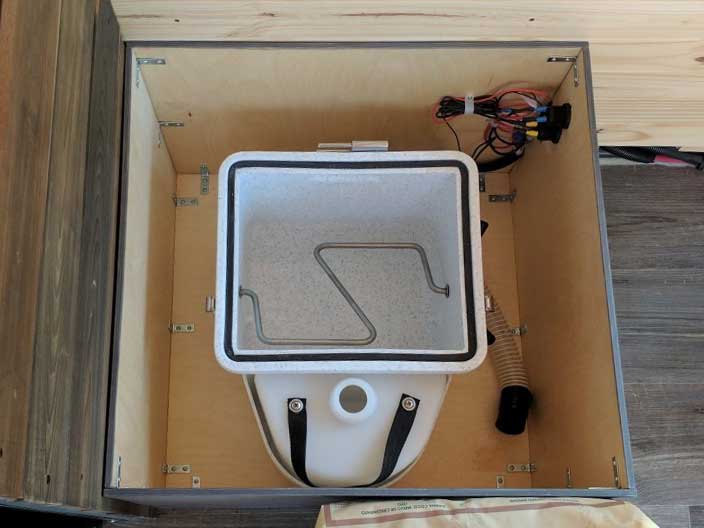
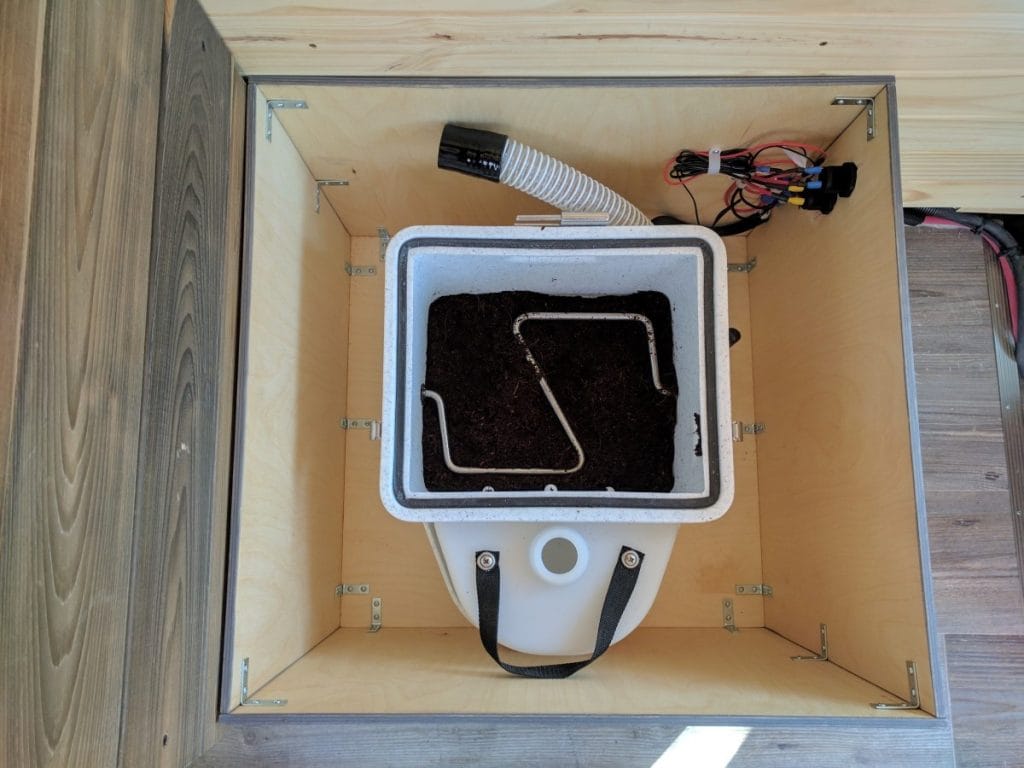
Add your composting medium to the solids bin before the first use. Coconut coir (sold as compressed bricks — add water to expand) is the most popular choice. Cover the bottom of the solids compartment with a 1–2″ layer. For layering toilets, line the bin with a compostable bag before adding medium.
During use
Liquids only: The diverter handles everything automatically. Sit slightly forward to ensure urine hits the diverter and not the solids compartment.
Solids: After use, add a small scoop of medium on top. For agitator models, give the handle or button a few turns to mix. For layering models, just add the scoop and close the lid.

Toilet paper can go in the solids bin — single-ply or RV-grade TP breaks down faster and is recommended.
Emptying liquids
The liquid bottle typically needs emptying every 2–4 days for one person, more frequently for two. It can be emptied in any toilet, a grey water dump, or diluted and poured on non-edible plants (urine is an excellent fertilizer when diluted 10:1).
Emptying solids
How often depends on the model and usage:
- Layering toilets (Trelino, Cuddy Lite): every 1–2 weeks for one person
- Agitator toilets (Cuddy, Nature’s Head): every 3–6 weeks for one person
For layering toilets, lift out the bag, tie it off, and place it in a regular trash bin. For agitator toilets, tip the solids compartment into a bag over a trash can.
Odor tips
- Never mix liquids and solids — this is the single most important rule
- Keep the fan running continuously if the model has one
- Empty the liquid bottle before it overfills
- Use enough medium in the solids bin
- In hot climates, empty more frequently
Cleaning
Wipe down the bowl and seat as needed. For the liquid bottle, a rinse with diluted white vinegar or citric acid solution every few empties prevents mineral buildup. Avoid bleach or harsh chemicals — they can kill the beneficial microbes that help break down solids.
Final Thoughts
For most van lifers, a composting toilet is the right answer. They’re compact, odor-free, genuinely easy to live with, and free you from ever needing a dump station.
If the upfront cost is a barrier, start with a bucket toilet and upgrade later. If convenience is the top priority and full-time use isn’t the plan, a cassette or dry flush toilet gets the job done with less learning curve.
Whatever the choice, having any toilet in the van almost always turns out to be worth it.