We’re big fans of pull-out drawers in the garage: the bike tray makes loading/unloading our bikes super easy, which is something we do almost daily when travelling in the van😏. The storage tray helps us stay organized, and there’s no need to crawl into the van to reach our gear. Here’s how we made them!
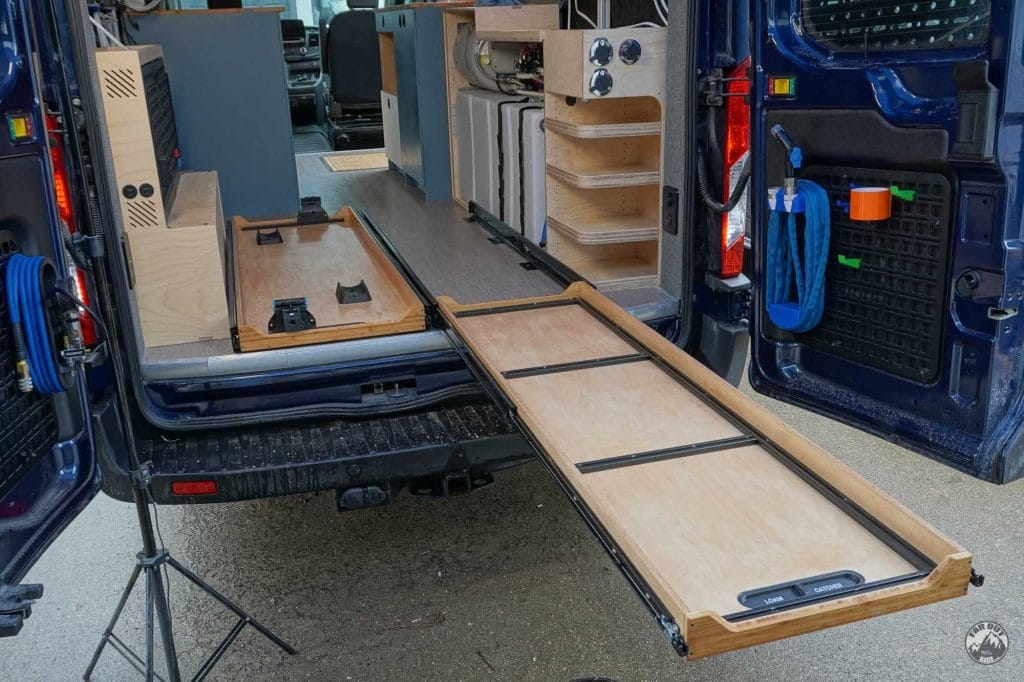
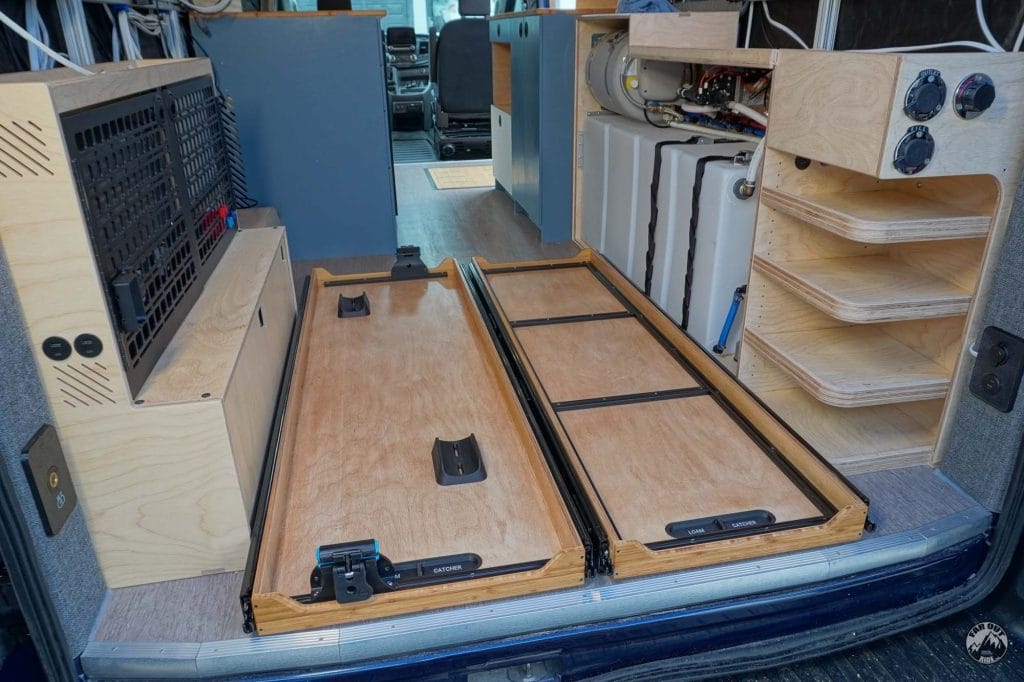
Material & Resources
Time
15 hours
Cost
$300 USD
(per drawer)
Weight
60 lbs
(per drawer, including 34 lbs slide)
Material
| ITEM | DESCRIPTION | QTY (per tray) | BUY |
|---|---|---|---|
| RockyMounts DropTop | Thru-axle mount for 12mm, 15mm, & 20mm axles up to 110mm wide. | 2 | Amazon |
| Drawer Slides with Lock | These are great, especially paired with the Heavy Duty brackets (below)! | 1 pair | Regular Black |
| Heavy Duty Brackets for Drawer Slides | These brackets are made specifically for the Vadania slides. No need for wooden sides (like we did in FarOutVan 1), neat! | 8 | Amazon |
| M6 x 6mm Stainless Sex Bolts, Black | To attach the slides to the Heavy Duty Brackets. | 8 | Amazon |
| M6 Stainless Washers | To attach the slides to the Heavy Duty Brackets. | 8 | Amazon |
| #12 x 1/2″ Stainless Pan Head Screws | To attach the tray to the slides. | 6 | Amazon |
| 12mm (1/2″) Plywood | To make the tray. | Source Locally | |
| #4 x 1-1/4in Stainless Flat Head Screws | To clamp panels together during glue-op. | 30ish | Amazon |
| Wood Glue | Titebond III Ultimate Wood Glue. | 1 | Amazon |
| Sanding Disks for Orbital Sander | To prep for coating, and sand between coats. | 1 | Amazon |
| Polyurethane Sealant | To seal/protect the cabinet. | 1 | Amazon |
| Spray Paint | To color-match the brackets with the slides. | 1 | Amazon |
| Stain | To stain the trays. | 1 | Amazon |
| M6 x 12mm Stainless Thread Inserts | To attach the trays to the van’s floor. (Threaded inserts are ideal for assembly/disassembly). | 8 | Amazon |
| M6 x 16mm Stainless Flanged Button Head Screws | To attach the trays to the van’s floor. | 8 | Amazon |
| 3D Printed Thingies | 3D print files for the loam catcher & rear wheel support. | FarOutRide |
Fabrication
Tray
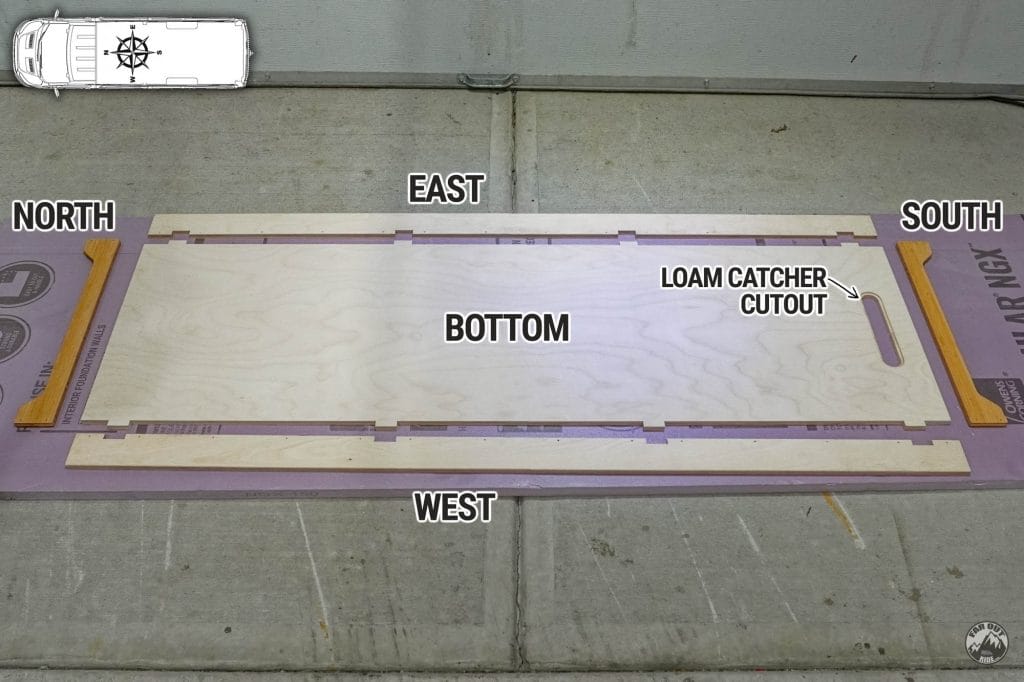
We first cut the parts. Bottom, East & West are 1/2″ Baltic birch, North & South are 1/2″ bamboo ply:
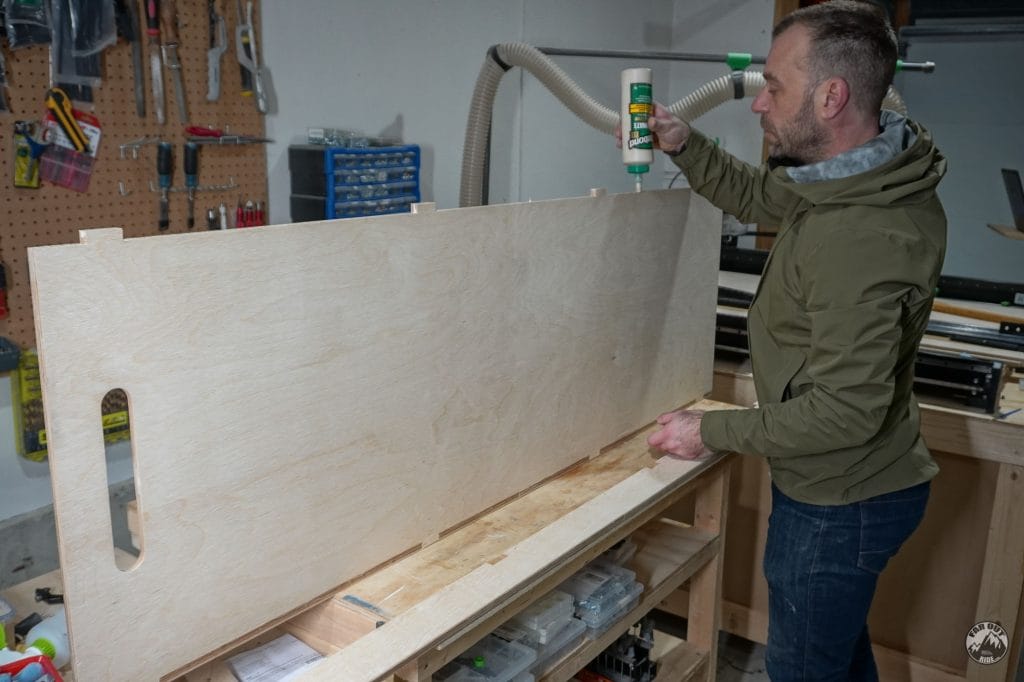
Apply glue to the mating surfaces:
A hammer and some clamps helped assemble the finger joints together:
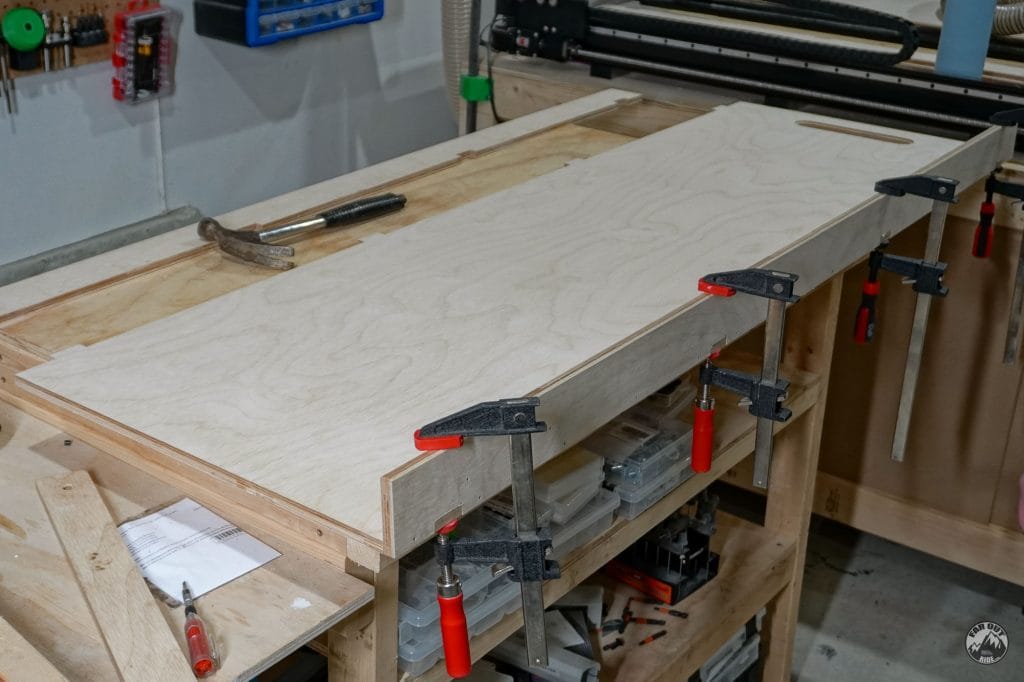
#4 x 1-1/4″ stainless screws keep the side clamped to the bottom while the glue cure:
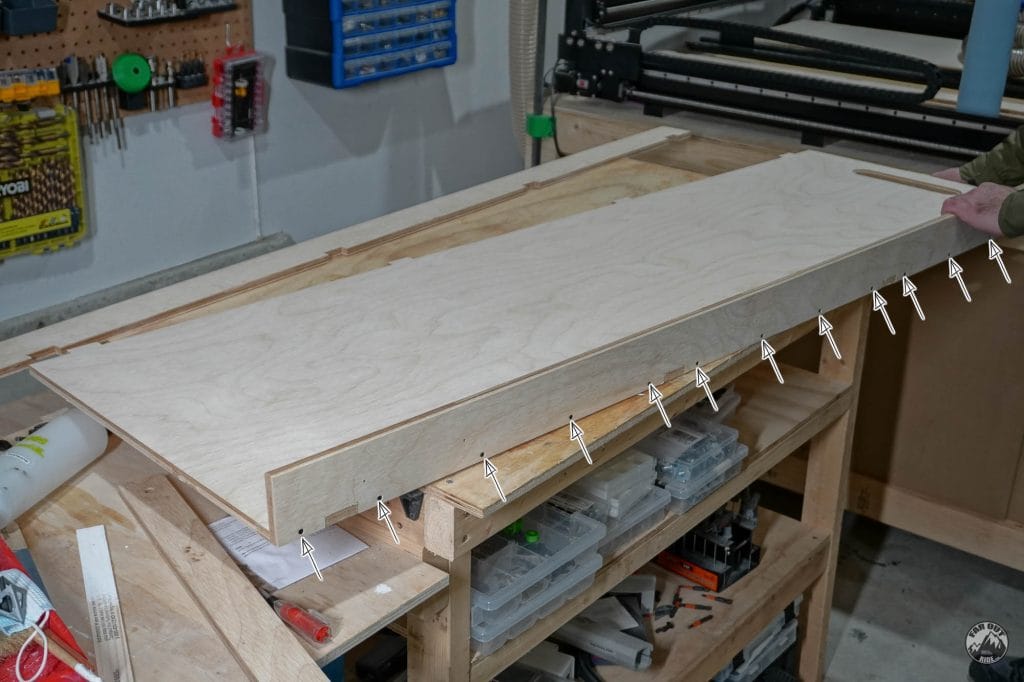
With the bottom & sides assembled, we finished as follows:
- Sand to 220 grit with orbital sander.
- Apply a layer of water-based polyurethane (wait 2-4 hours).
- Sand to 220 grit.
- Apply another layer of polyurethane (wait 2-4 hours).
- Sand to 220 grit.
- Stain (wait overnight).
- We applied stain after two layers of polyurethane, because we found this minimizes blotching (which Baltic birch is very prone to).
- No sanding here!
- Polyurethane (wait 2-4 hours).
- Sand to 400 grit.
- Polyurethane.
That’s a lot of layers, but the bike tray must be sealed properly against water!
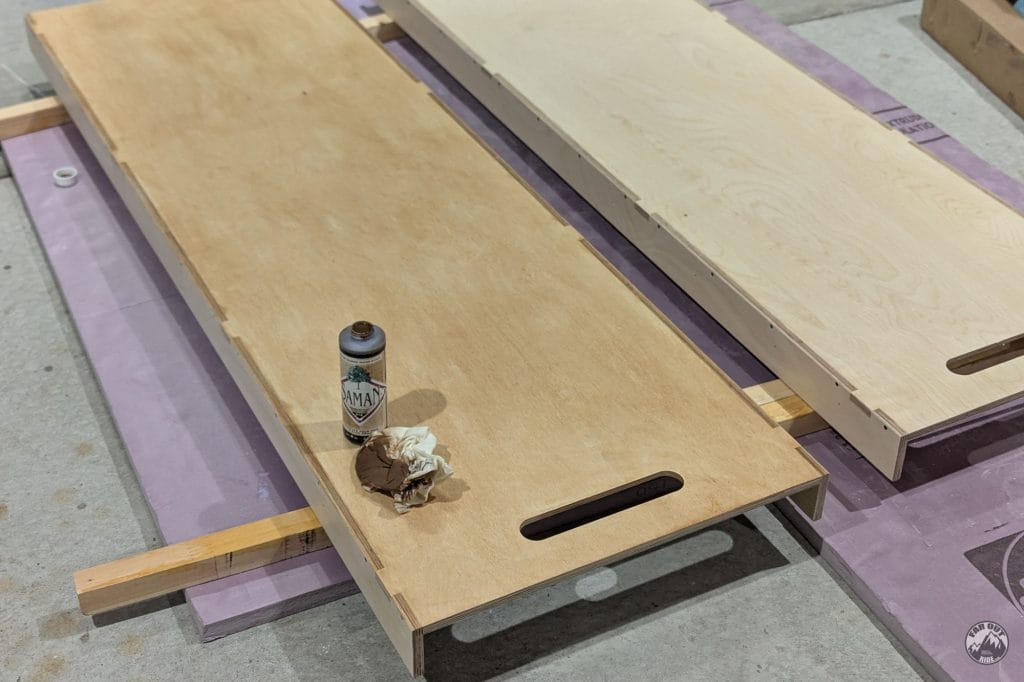
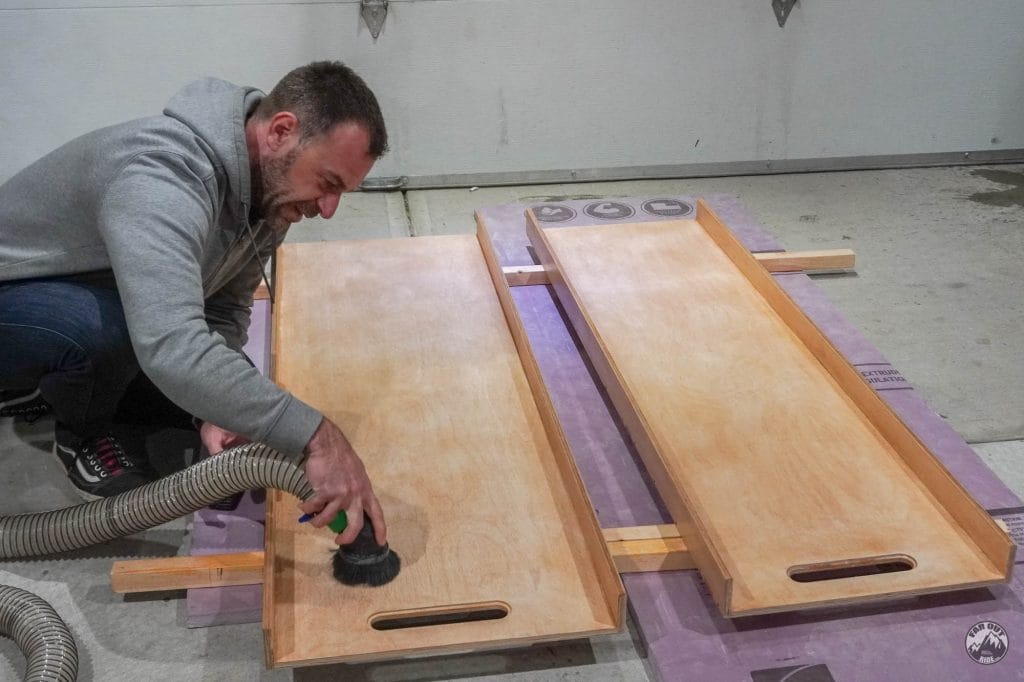
Sanding between each coat (except we didn’t sand after stain):
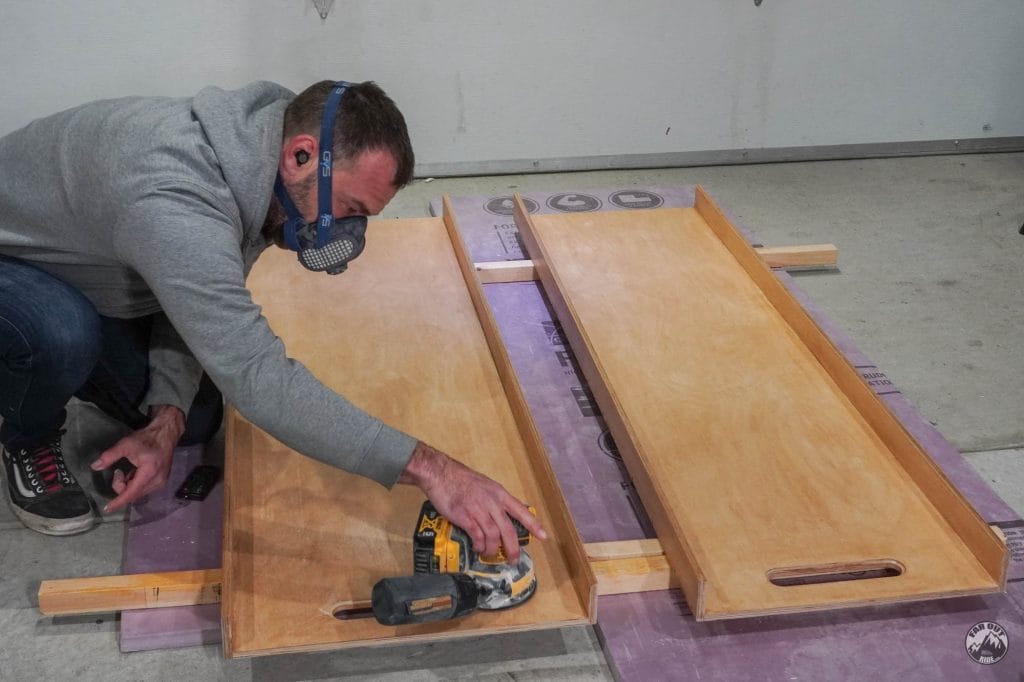
Remove dust before applying stain or sealant:
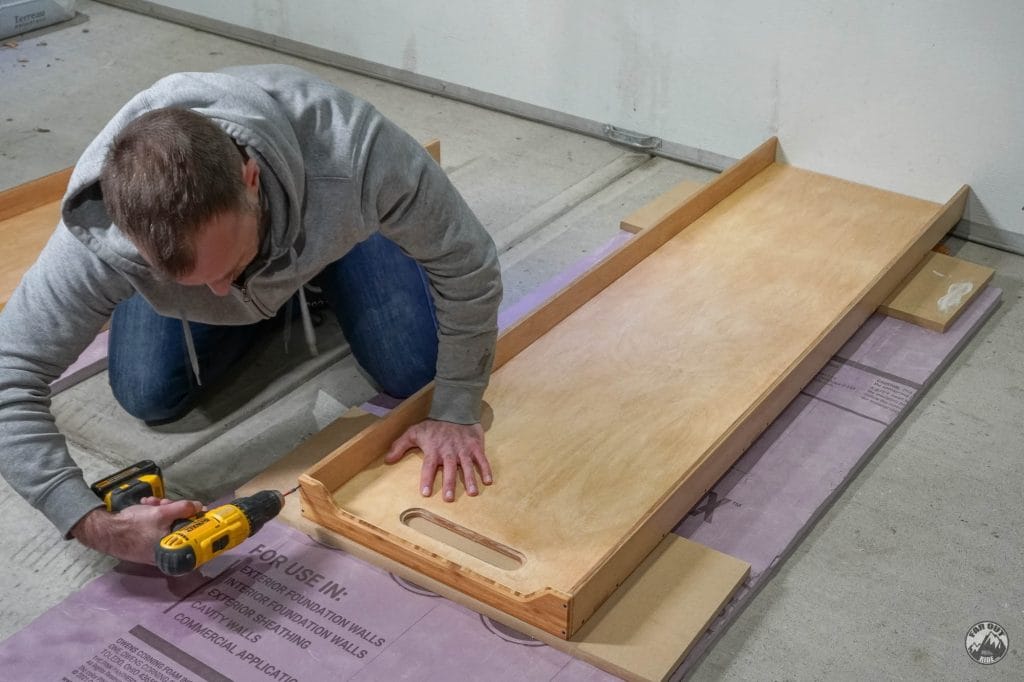
After finishing the drawer, we add the South and North faces (using glue and #4 x 1-1/4″ screws):
80/20 Tracks
We want our trays to be (somewhat) modular. For season change, or if our needs change later down the road. We considered L-Tracks, because they’re very common in van builds, but then, how about 80/20 “half” profile instead?
| Feature | L-Track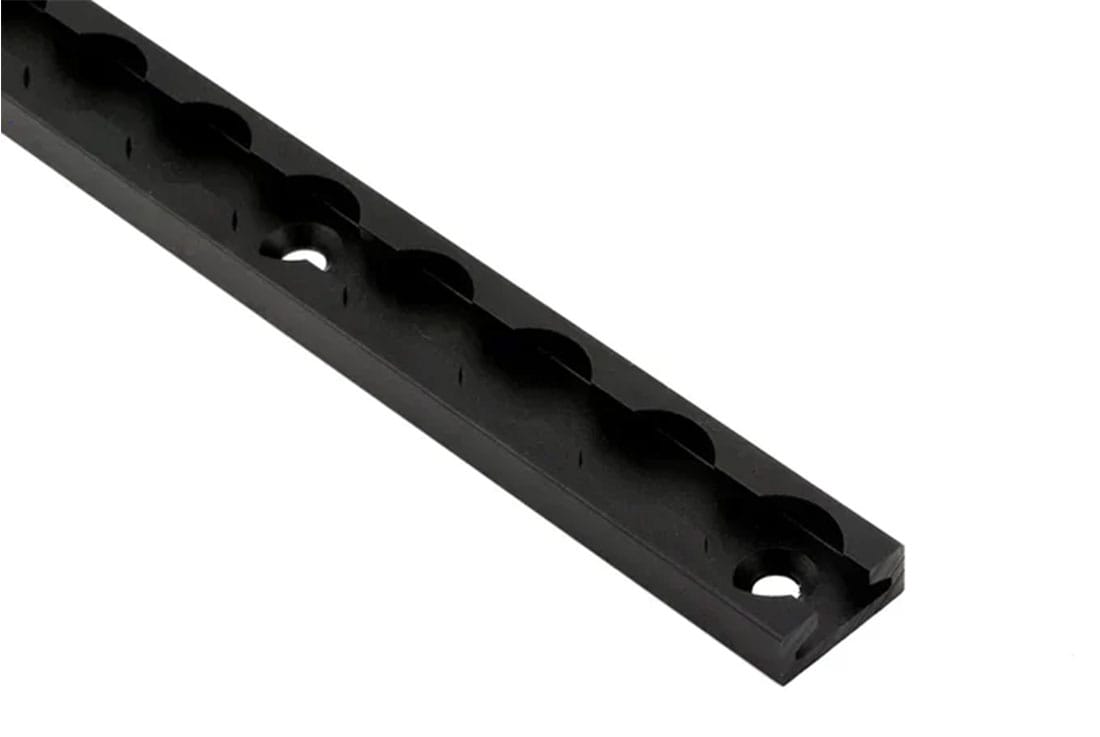 | 80/20 (1050 Half Profile)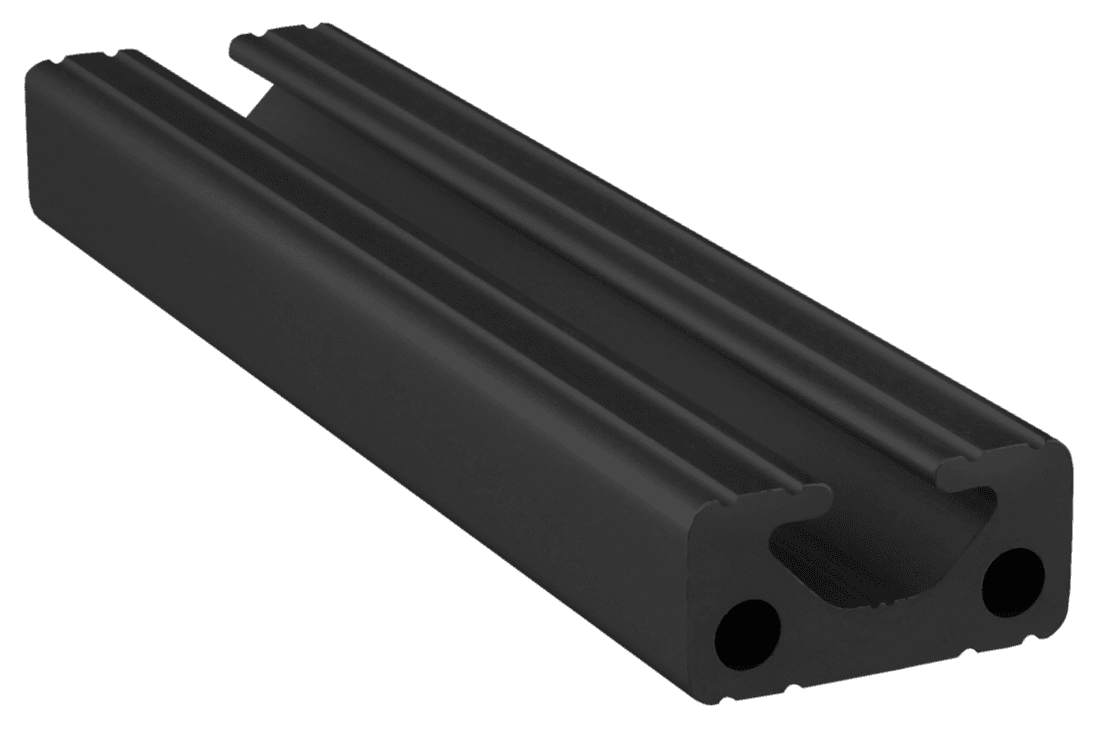 |
|---|---|---|
| Primary Use | Tie-down, securing gear, temporary mounts | Structural framing (cabinets, beds) |
| Adjustability | Incremental (every 1 inch) | Infinite |
| Height | 0.4″ | 0.5″ |
| Installation | Pre-drilled | Must be drilled |
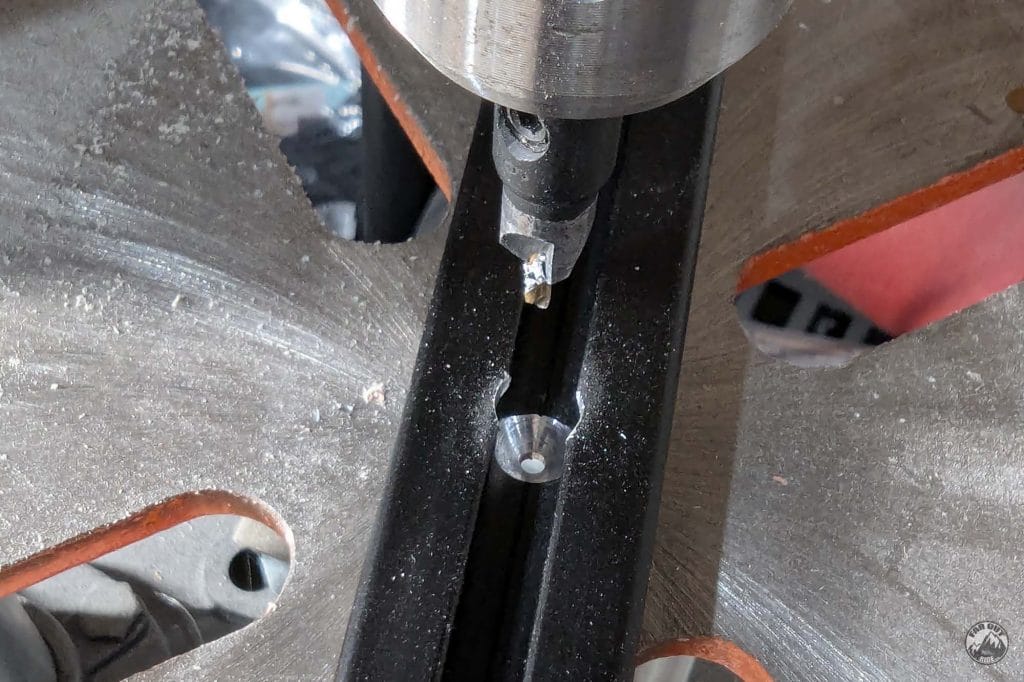
We’ll probably build some kind of 80/20 shelf unit into the storage tray at some point, so having 80/20 as a base makes sense to us. And we do like the 8020’s infinite adjustability, so let’s go! First, we need to add countersunk hole every 6-in or so:
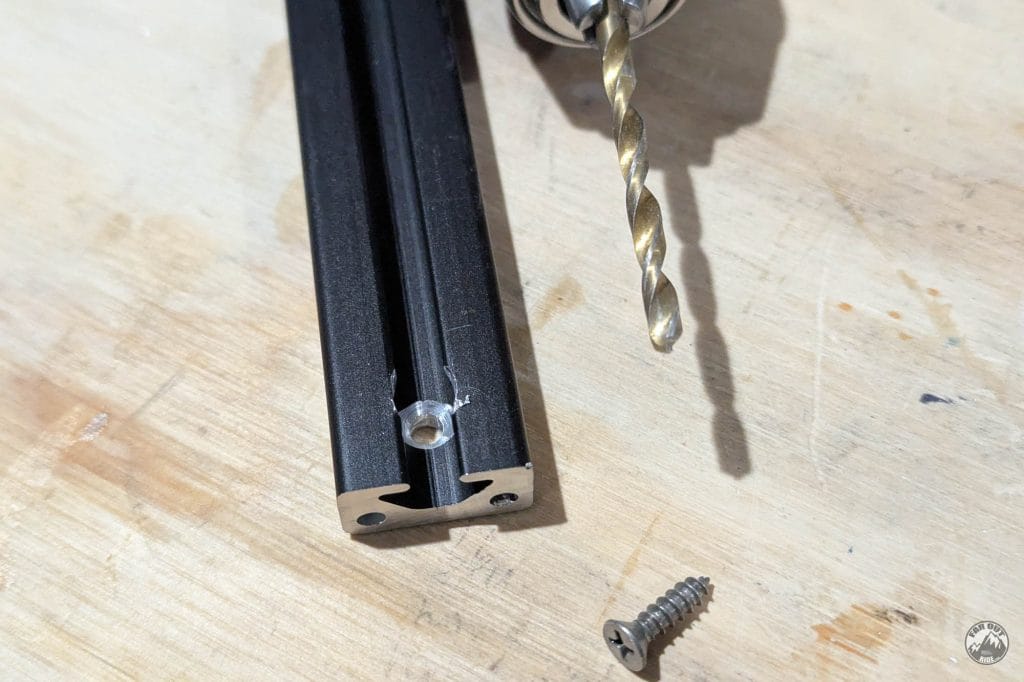
I first used a center punch to mark the location of the holes every 6 in or so, then used a #4 countersink drill bit (this will dull the tool, it’s probably no good after…):
I then fully opened the holes with a #6 drill bit:
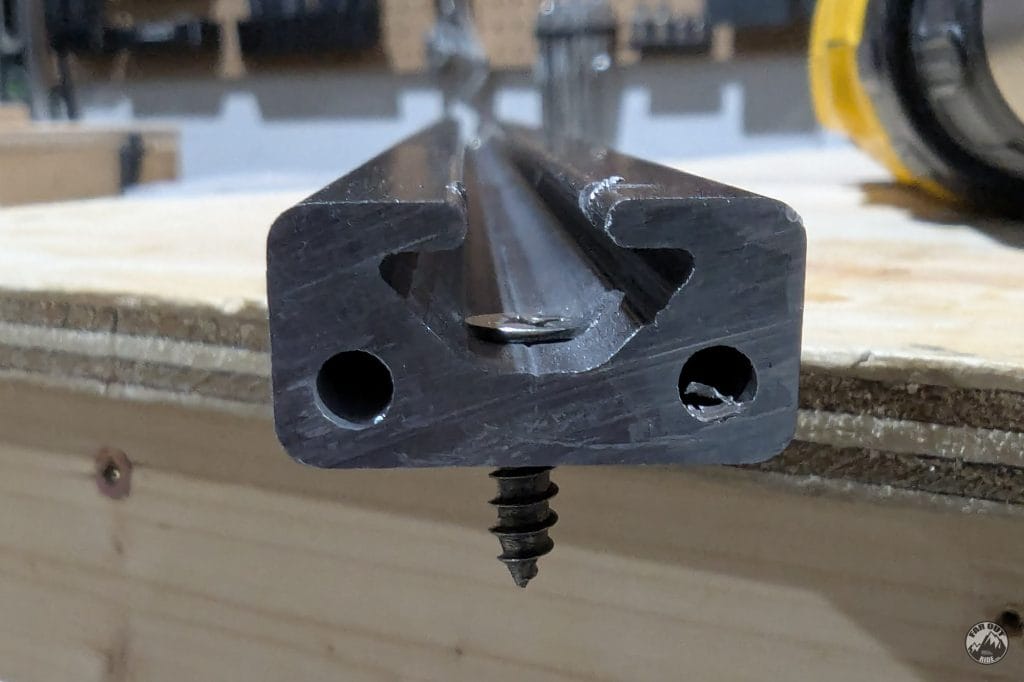
The countersunk screws sit flush with the bottom surface, so that t-nuts can still slide inside the profile:
Bike Drawer
I previously made two 80/20-Tracks:
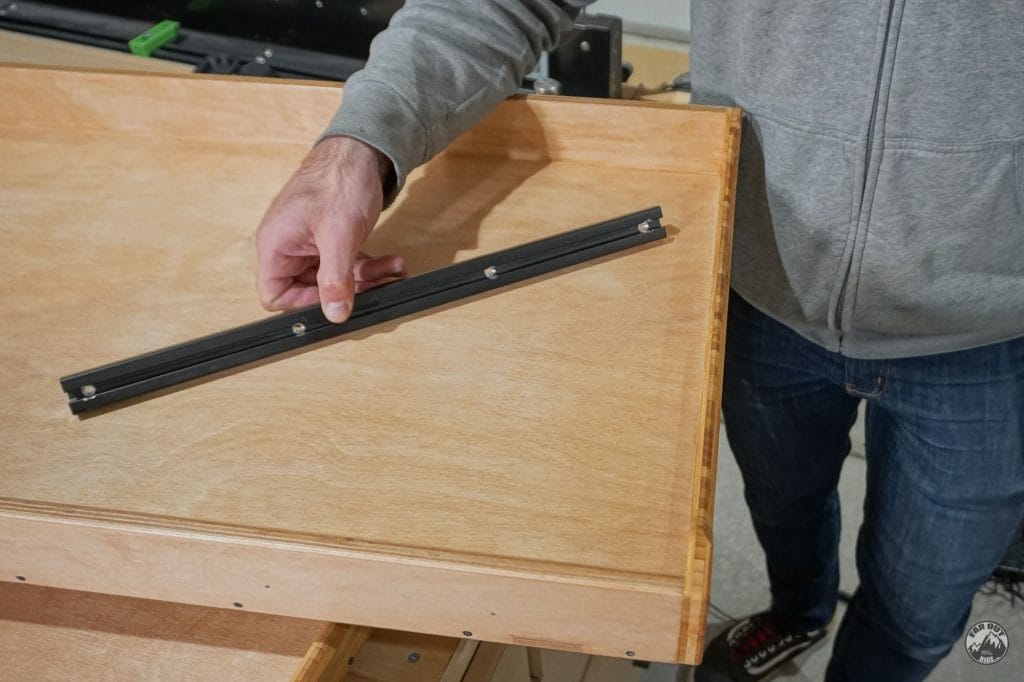
I first installed the RockyMounts DropTop into the 80/20-Track using M6x12mm stainless screws with M6 stainless T-Nuts:
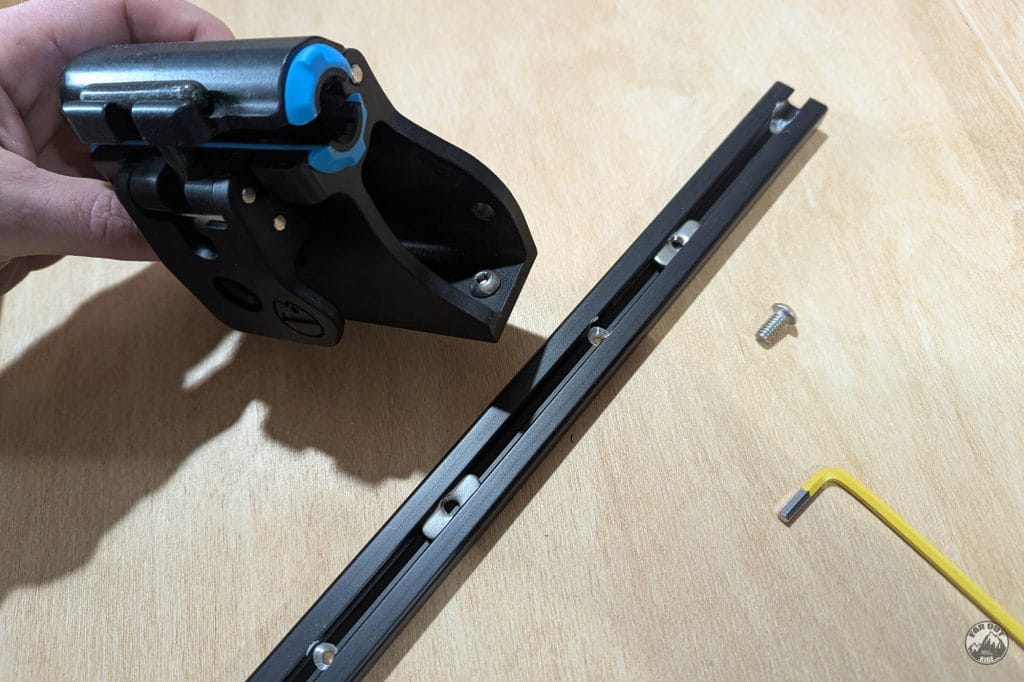
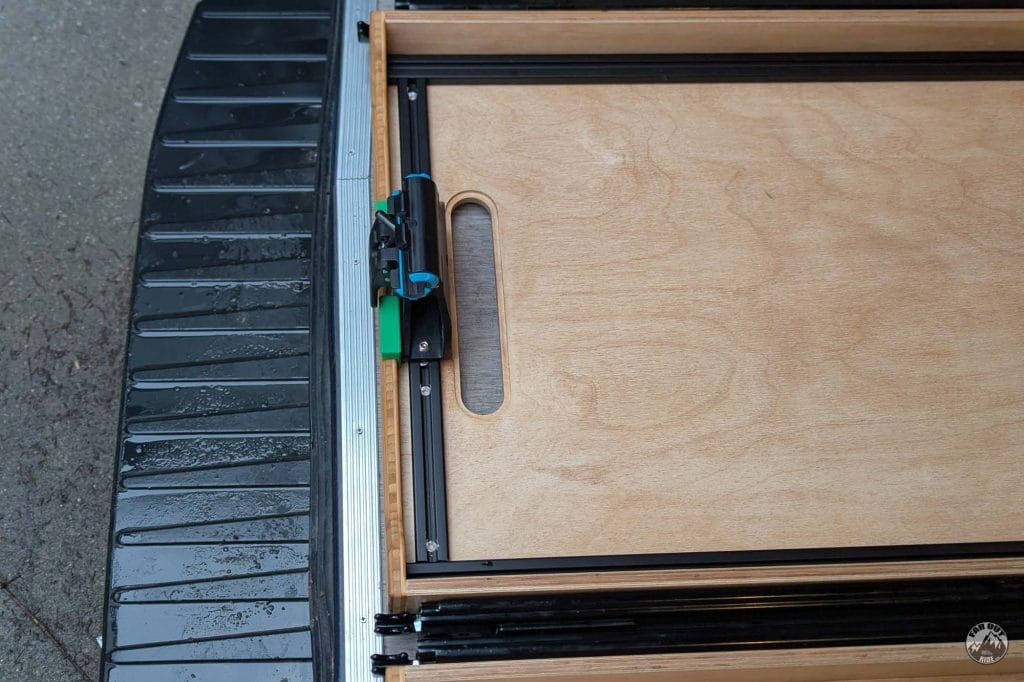
I used a shim to leave a 2–3 mm gap between the RockyMounts DropTop and the bamboo. The east & west tracks are temporary — I don’t plan to keep them, but I sized the front and rear tracks accordingly just in case I want to add them later:
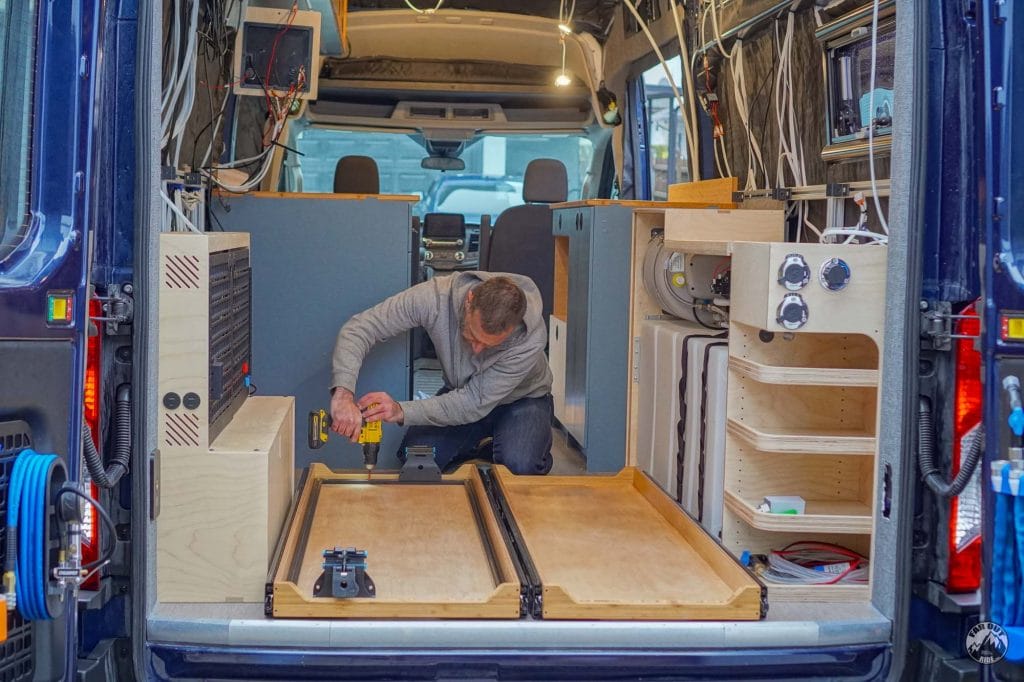
Oh boy, this is actually starting to look like an actual adventure van:
Storage Drawer
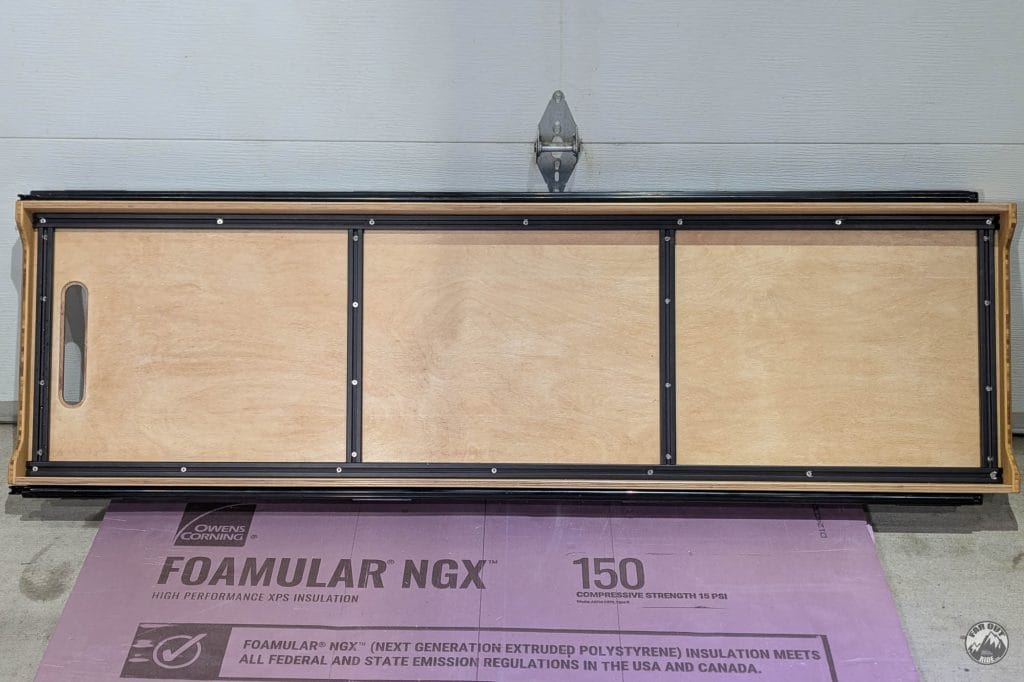
We added 80/20-Tracks around the perimeter and a few crossbars as well, for maximum modularity. The North and South crossbars are spaced from the bamboo panel to accept a RockyMounts Droptop (n+1 bikes!).
Slides
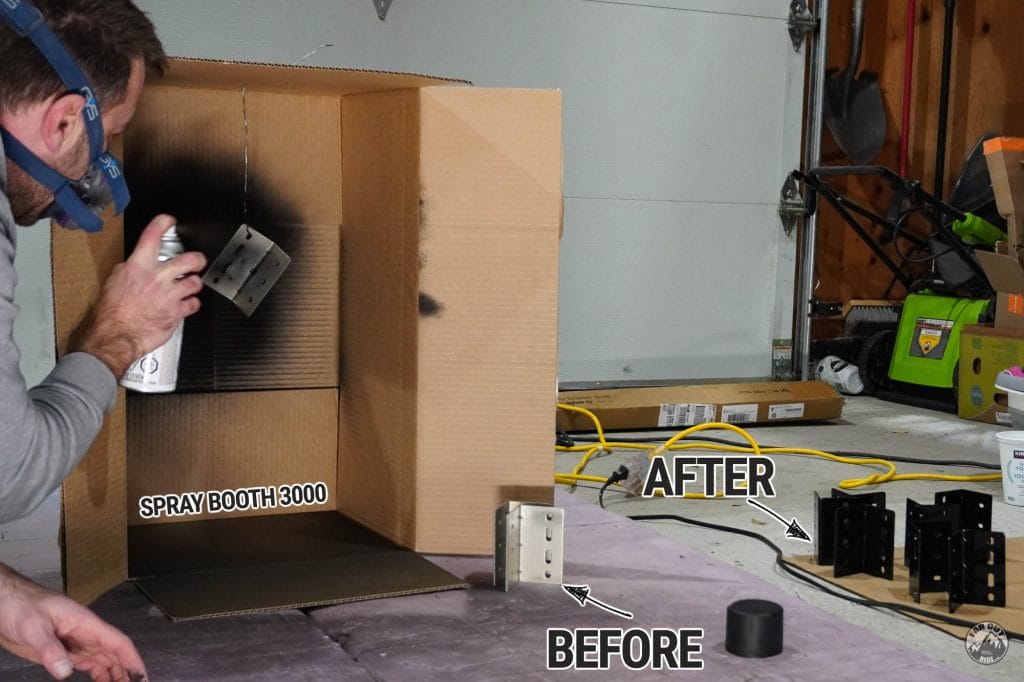
This is optional, but we spray-painted the brackets to match the slides (black):
We use M6x6mm sex bolts to fasten the brackets to the slides. The barrel nut (female) is a bit too long, so we used M6 washers to prevent bottoming out:
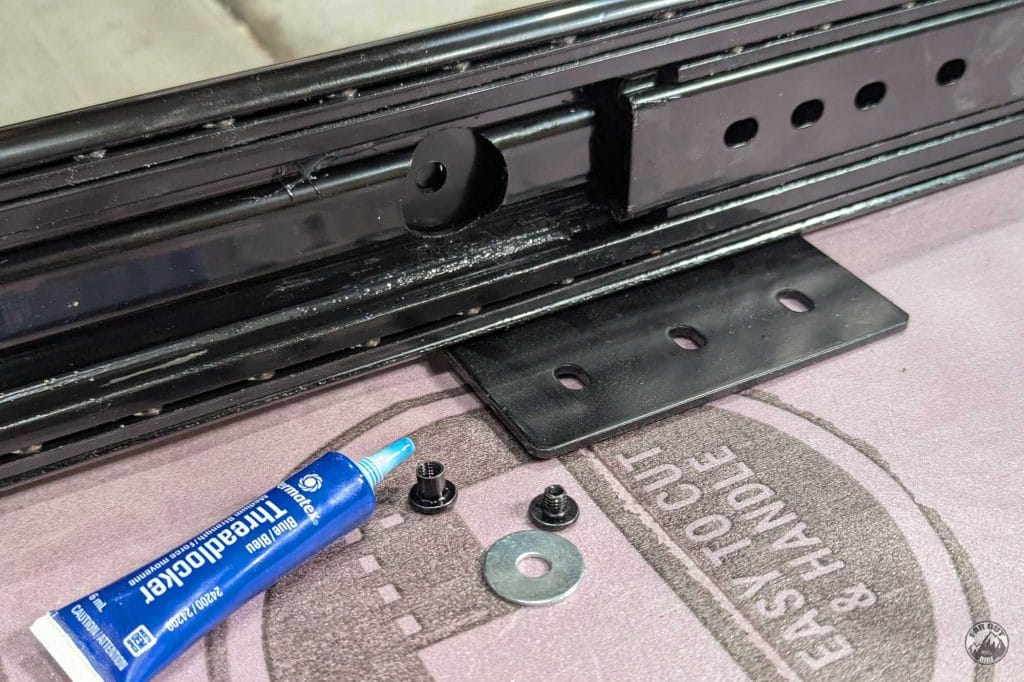
Inside the slide:
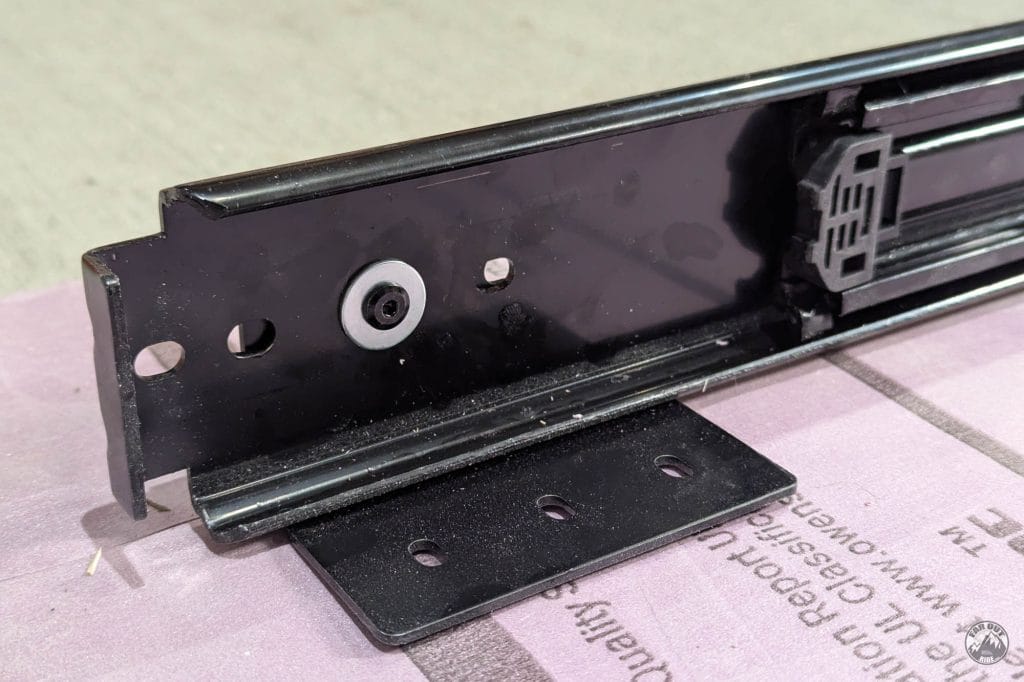
Outside the slide:
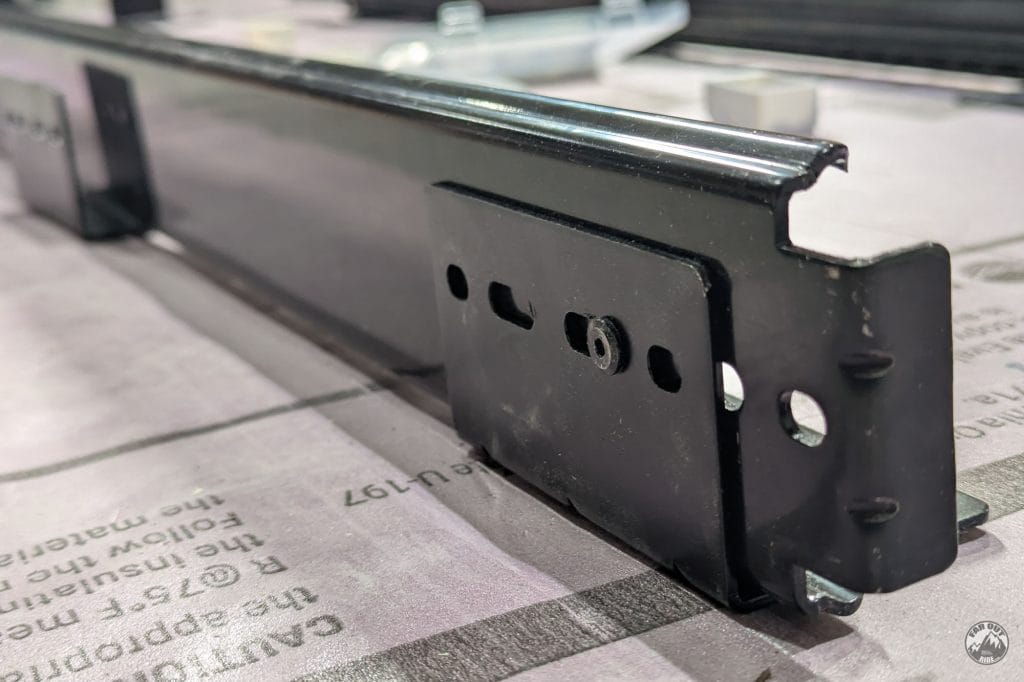
We used 4 brackets on each side:
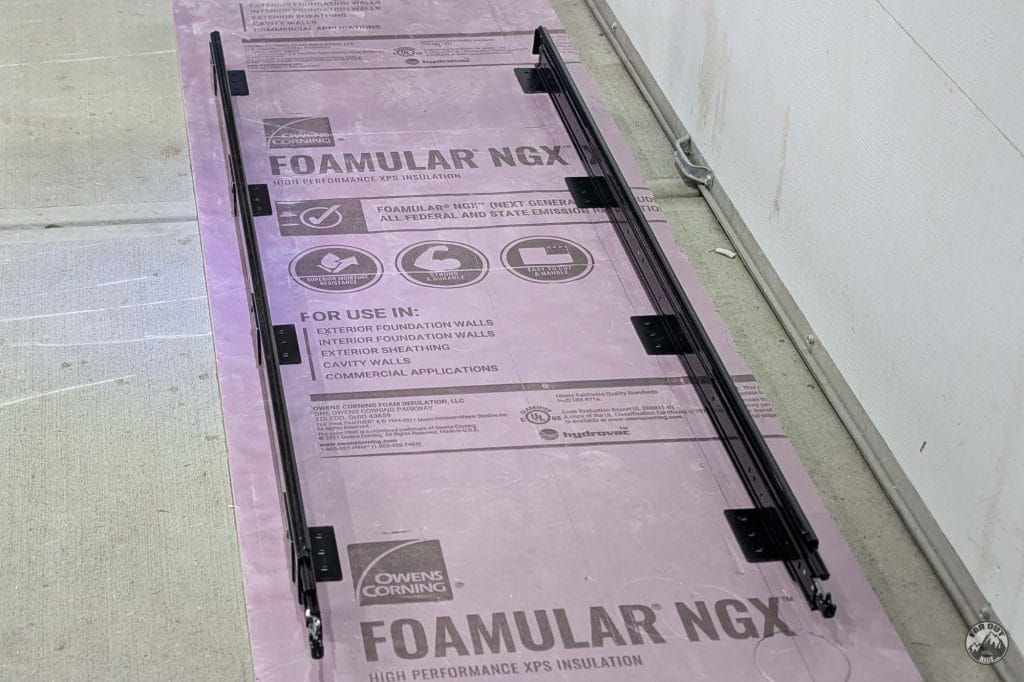
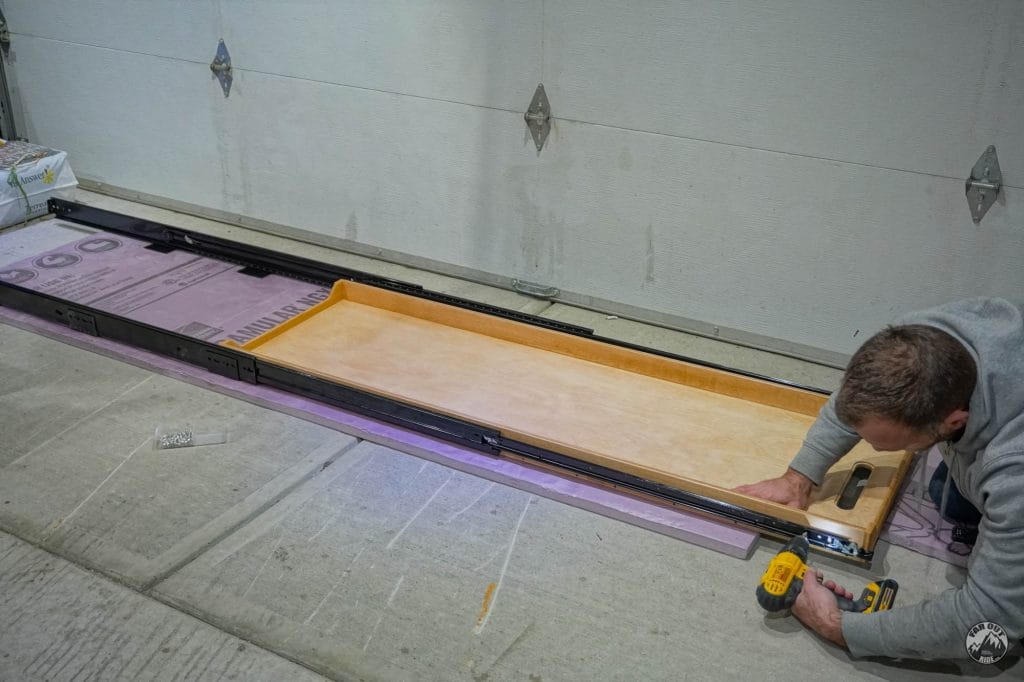
The tray is fastened to the slides with #12 x 1/2″ stainless screws:
Installation
Wood Screws vs Threaded Inserts
We used wood screws to fasten FarOutVan 1’s drawers, and it’s still holding to this day. This time, we’re using threaded inserts in case we want to remove and reinstall the drawers a few times (e.g. remove to ease access during van build).
As a general rule:
- Screws: Fine for permanent joints in hardwood (including Baltic birch plywood).
- Threaded Inserts: Offer higher pull-out resistance (especially in soft wood) and are best for items that need assembly/disassembly.
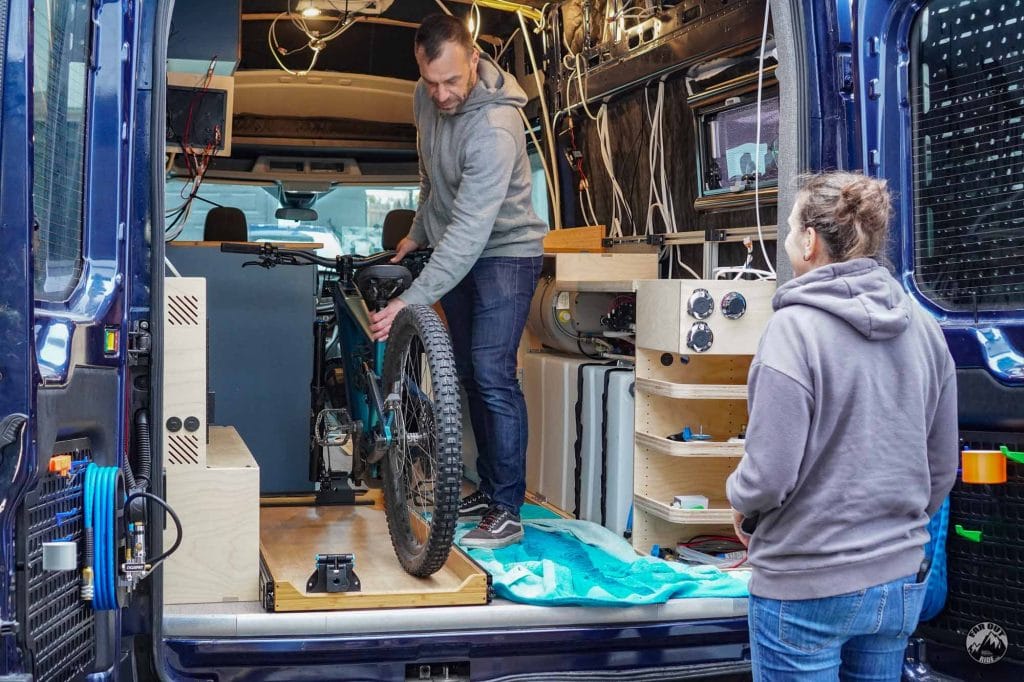
Together, both drawers occupy the full width of the garage, so no adjustment here. But we have to find the North-South position of the drawers. The bottleneck is the slide’s lock knobs and the bike’s rear wheel with the Mosquito Screen (to be installed later):
Now that we found the North-South position, we carefully open the slide just enough to reveal the North brackets, and add a temporary #8 screw to make sure the slides don’t move:
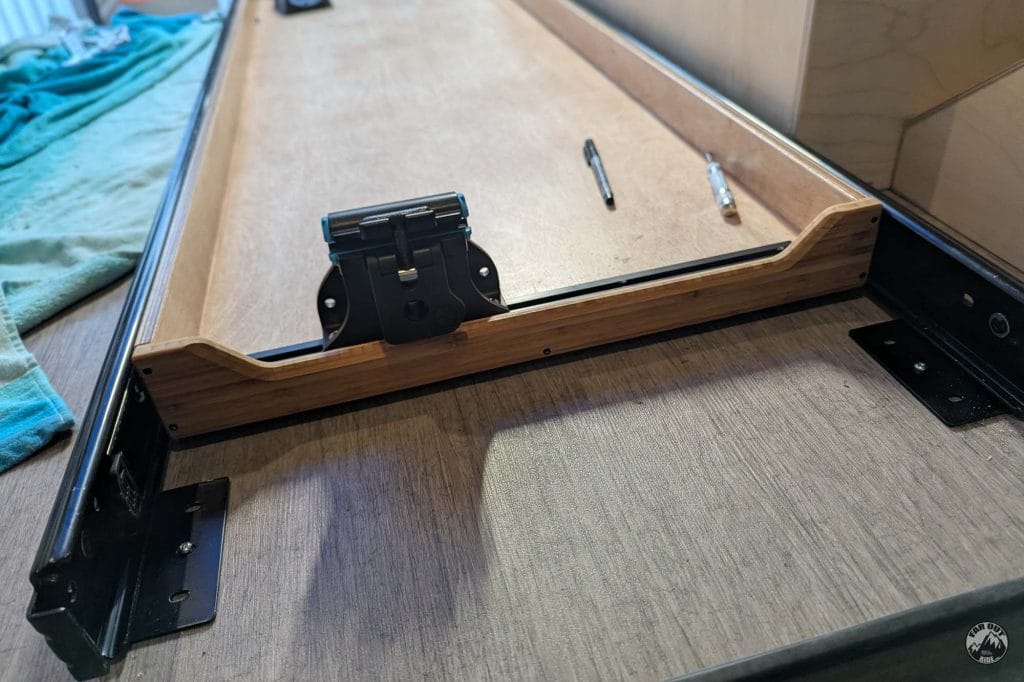
We open the drawer more, punch the center, and drill a pilot hole with a 1/8″ drill bit:
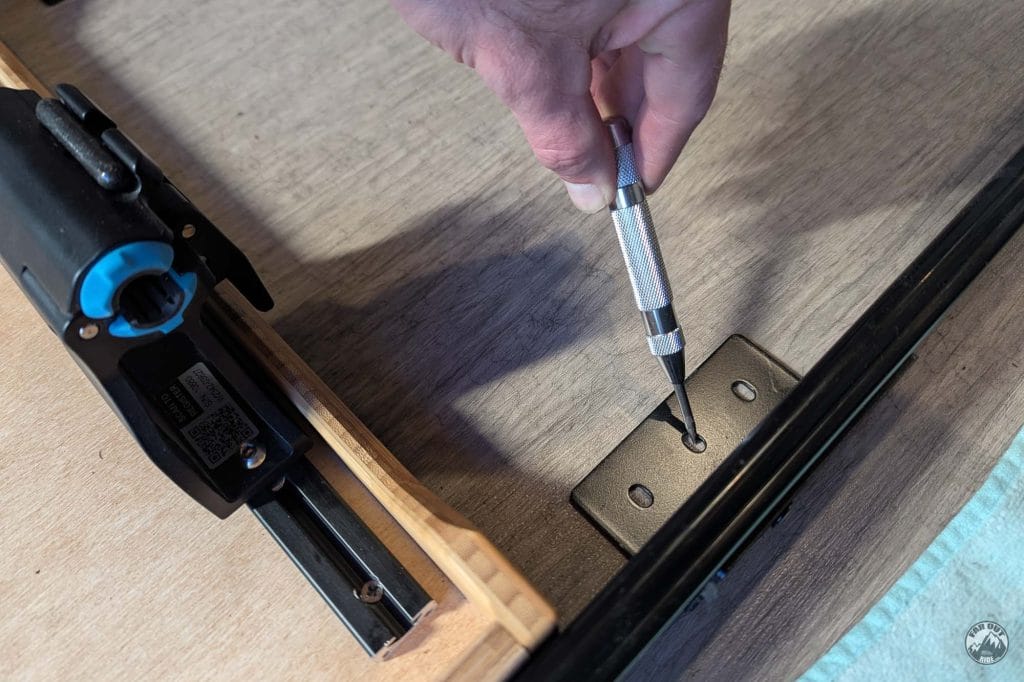
We pilot one hole for each of the 8 brackets:
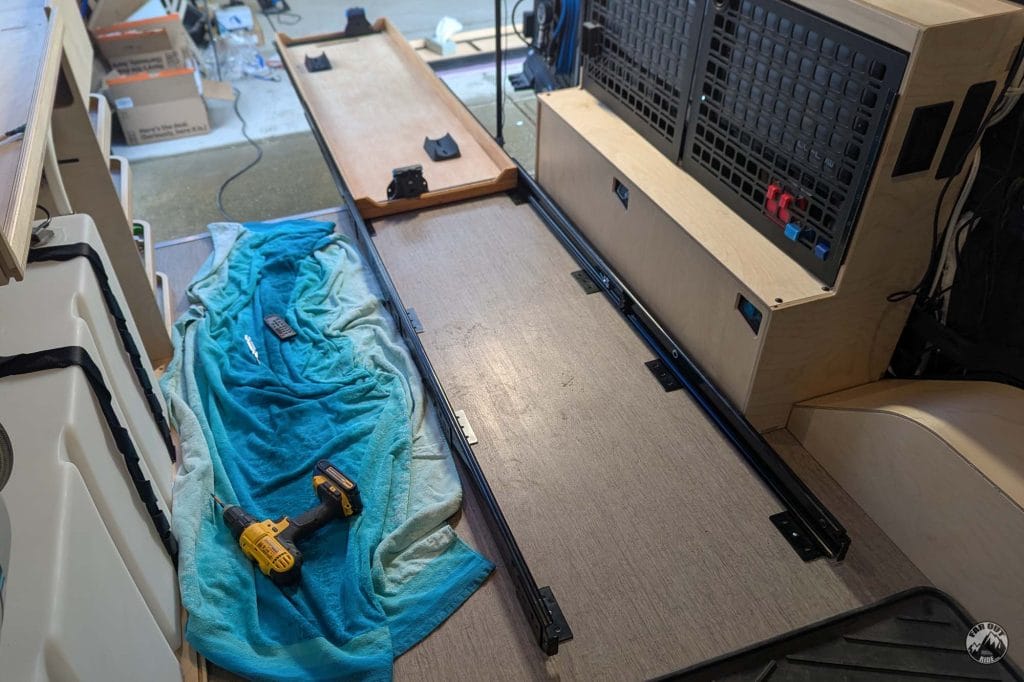
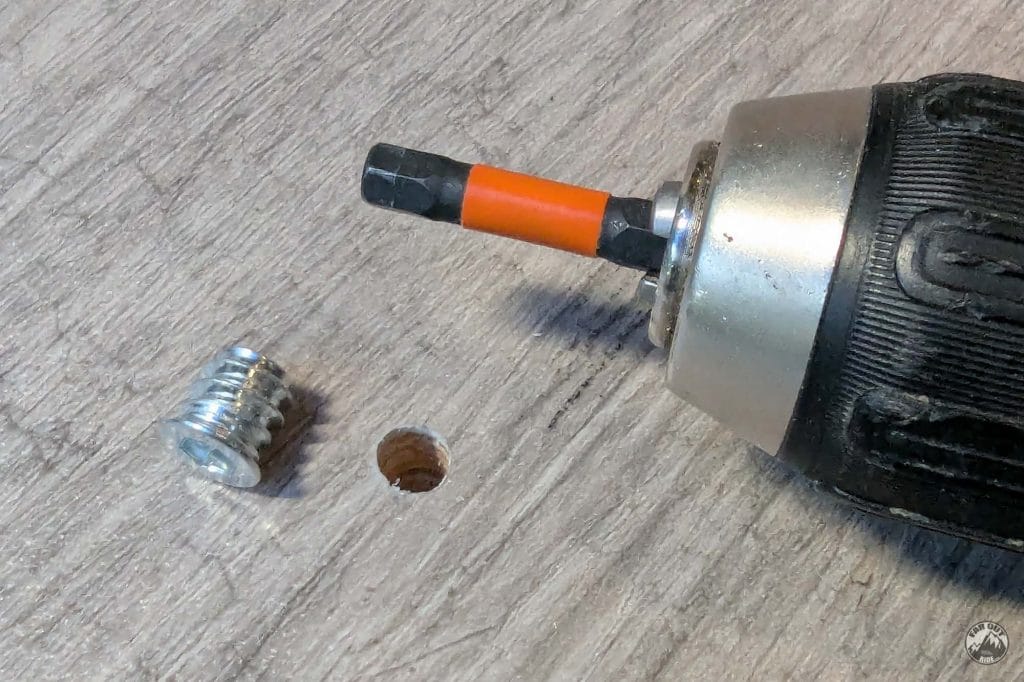
We can now remove the tray and fully open the 8 holes with a XXX drill bit, then install the threaded insert with a XX hex:
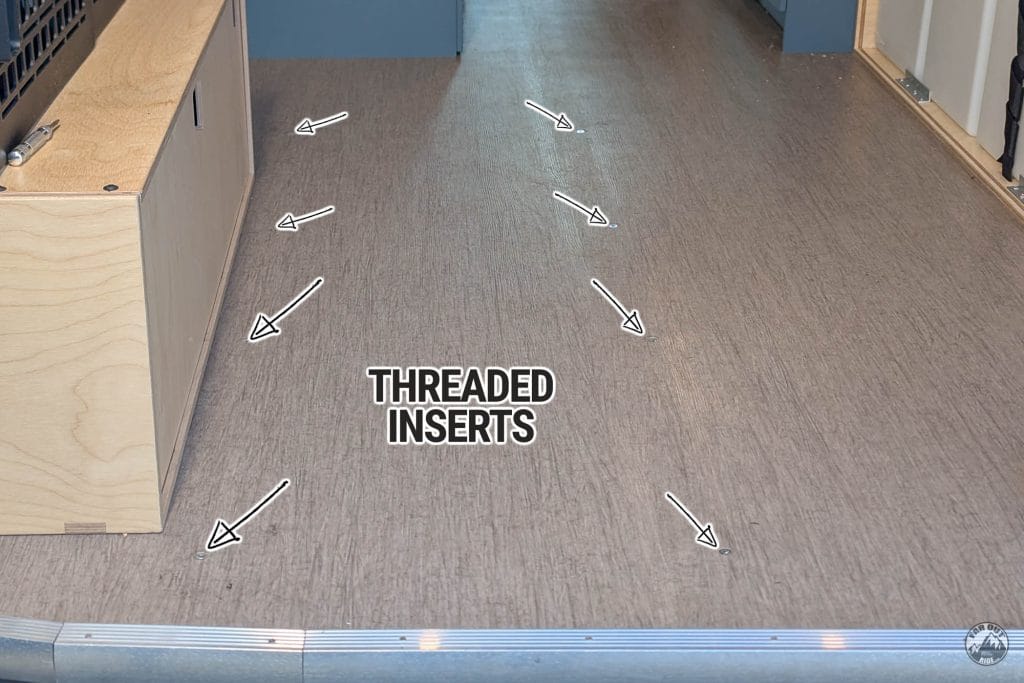
The threaded insert are flush with the floor, neat!
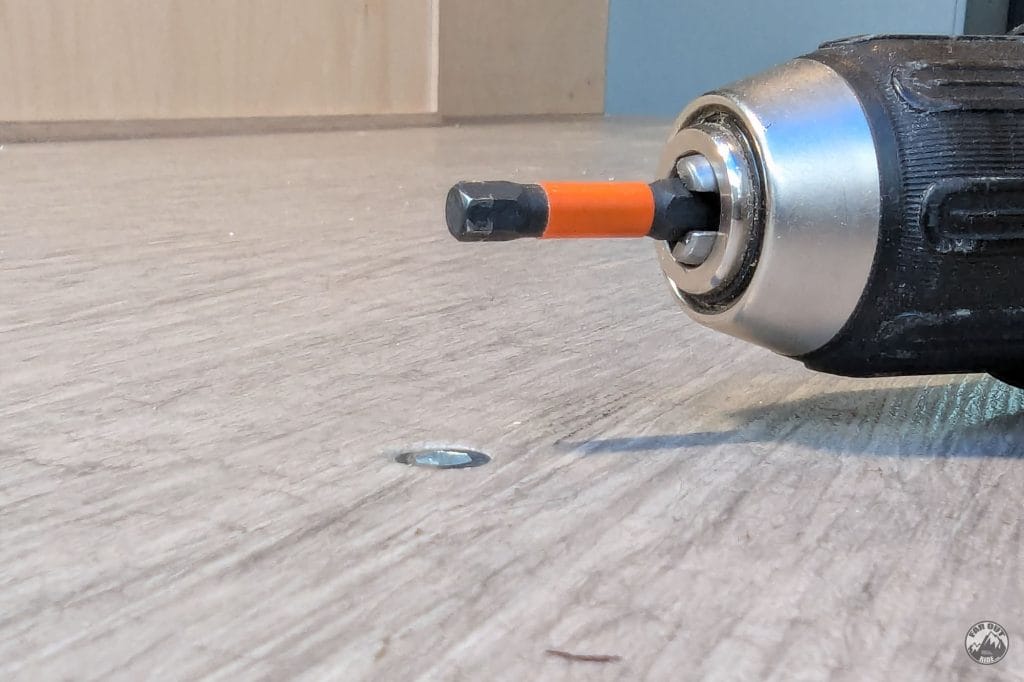
We’re ready to install the tray!
Always fastened hardware into threaded inserts by hand (no power tool) to prevent damaging them!
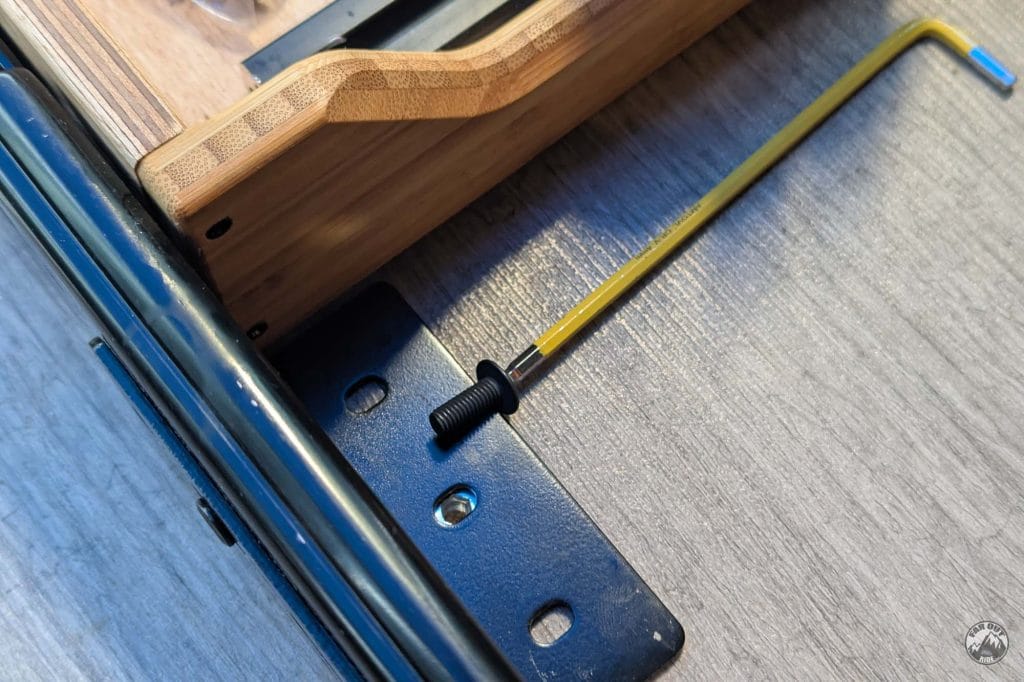
One and done! Looking good…
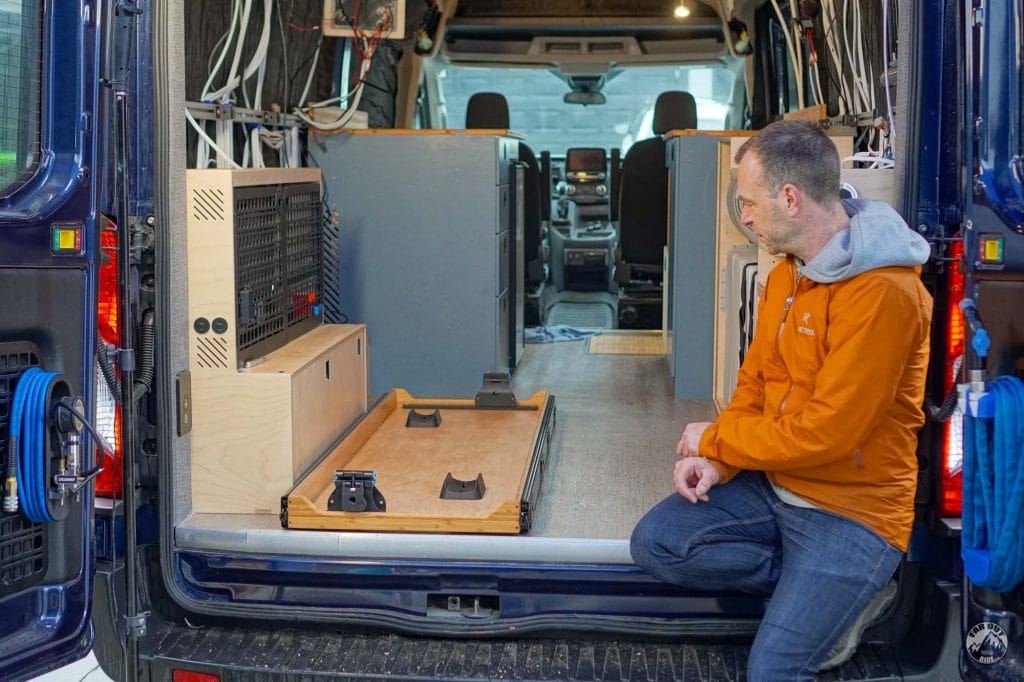
Up to the storage tray now. Drill:
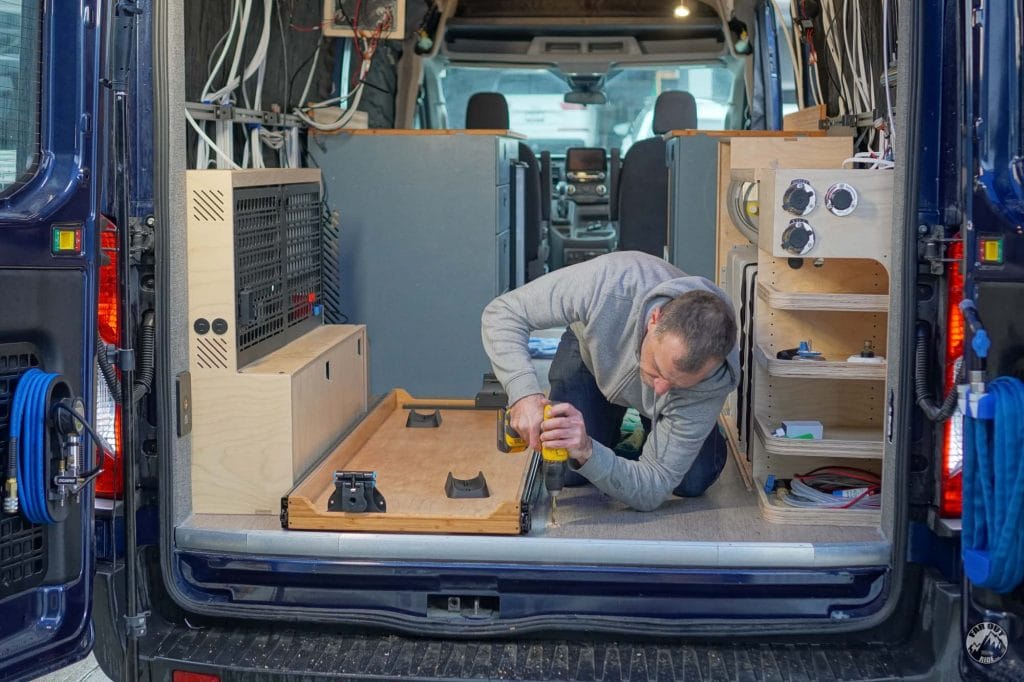
Threaded inserts:
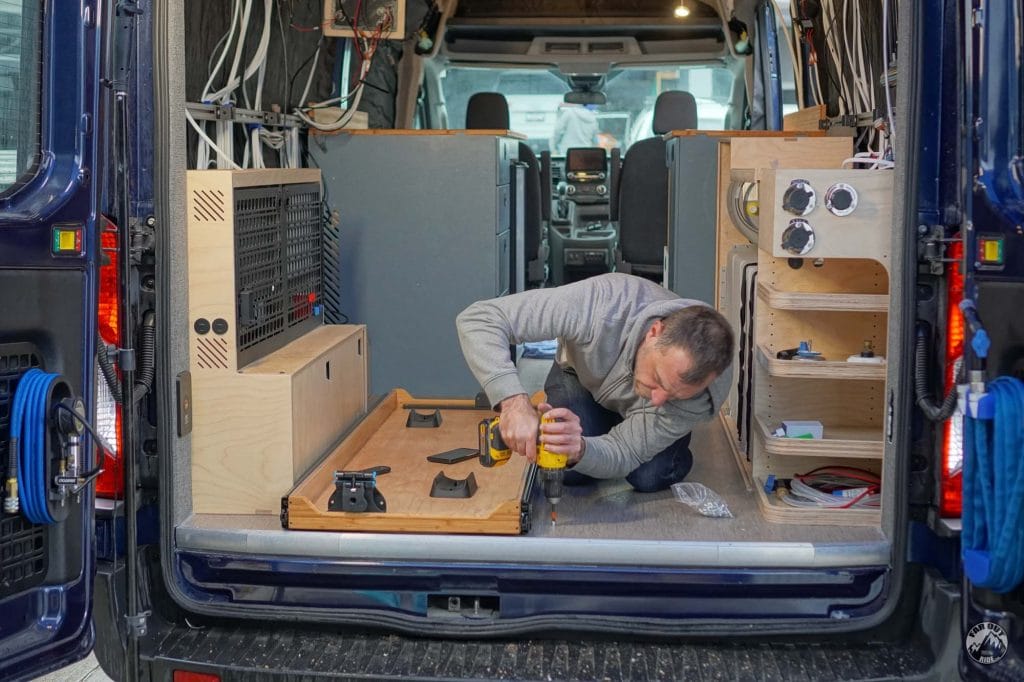
Fasten:
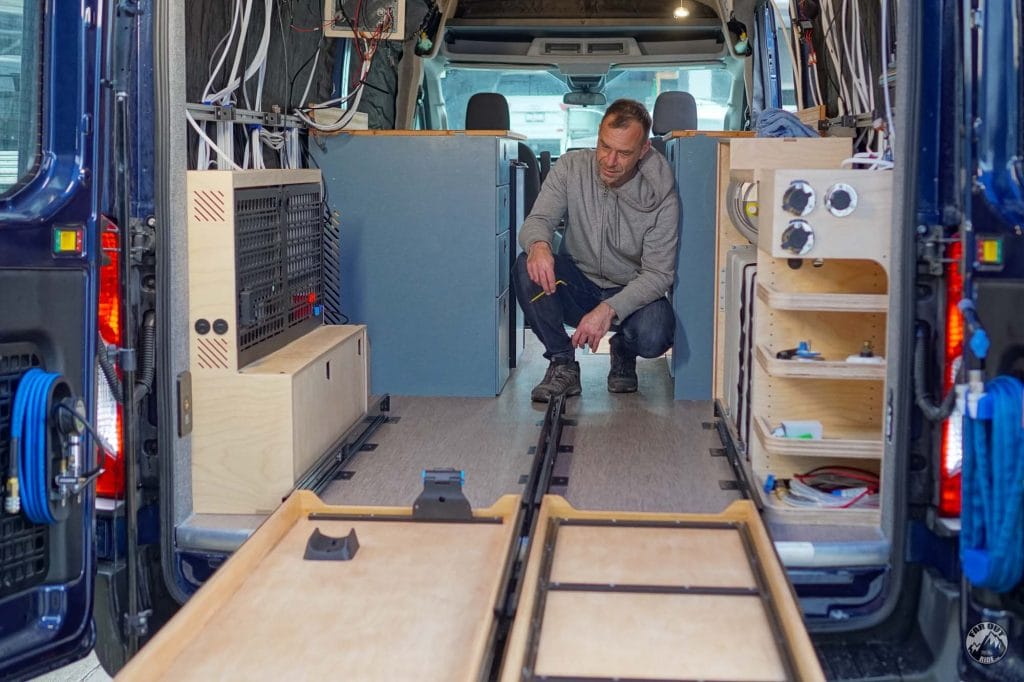
POV:
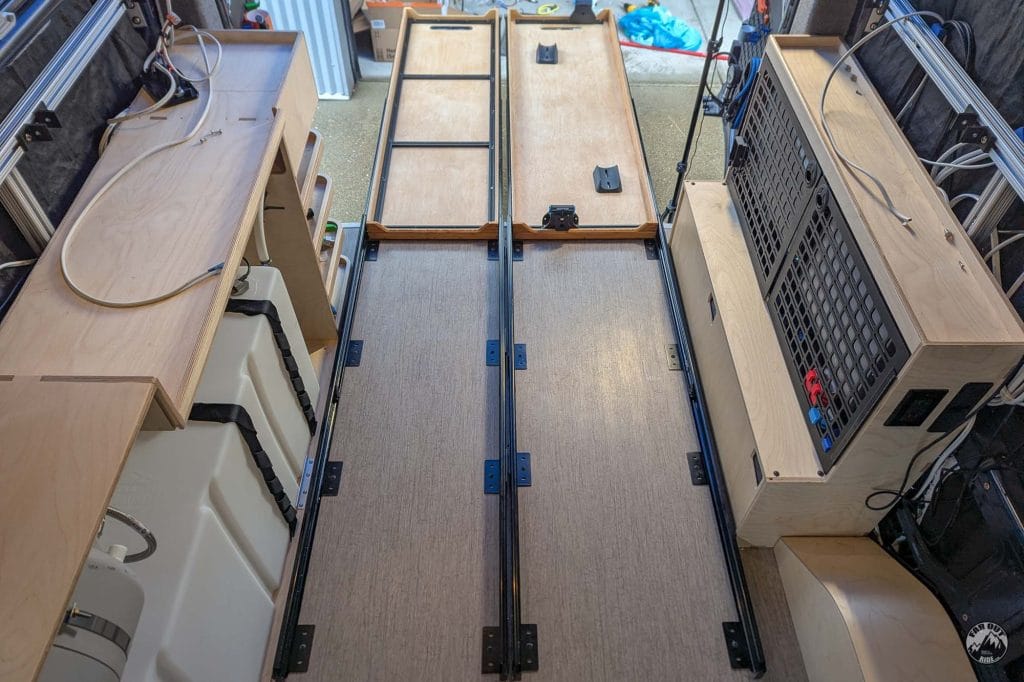
Yes!
3D Printed Thingy
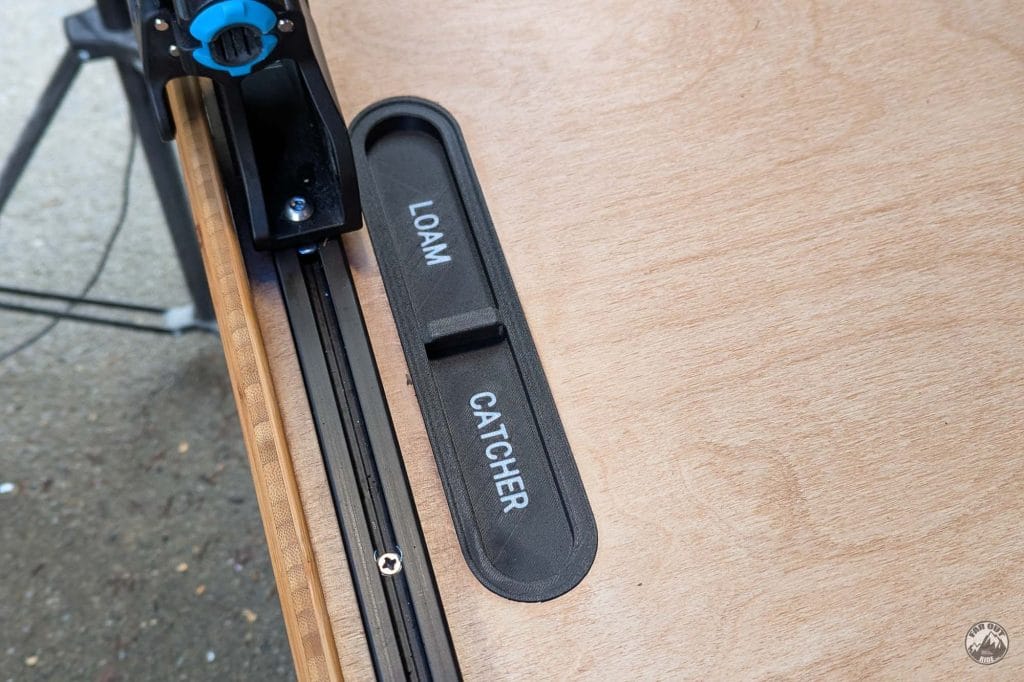
We added a cutout at the front to sweep the dust out of the drawer. We 3D printed a cover for it…
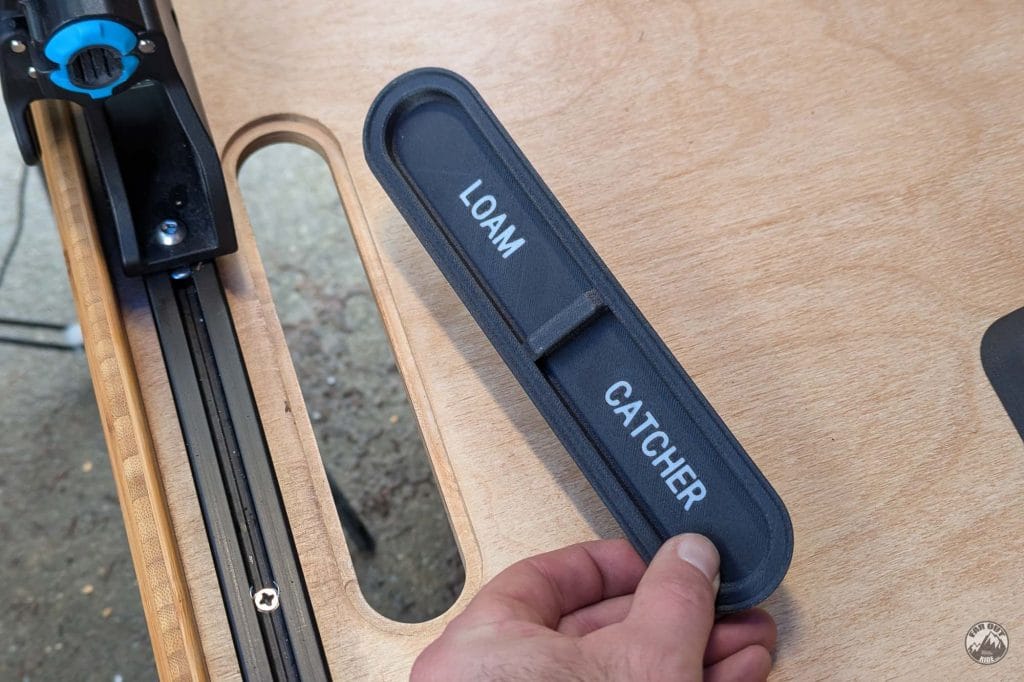
The dream catcher:
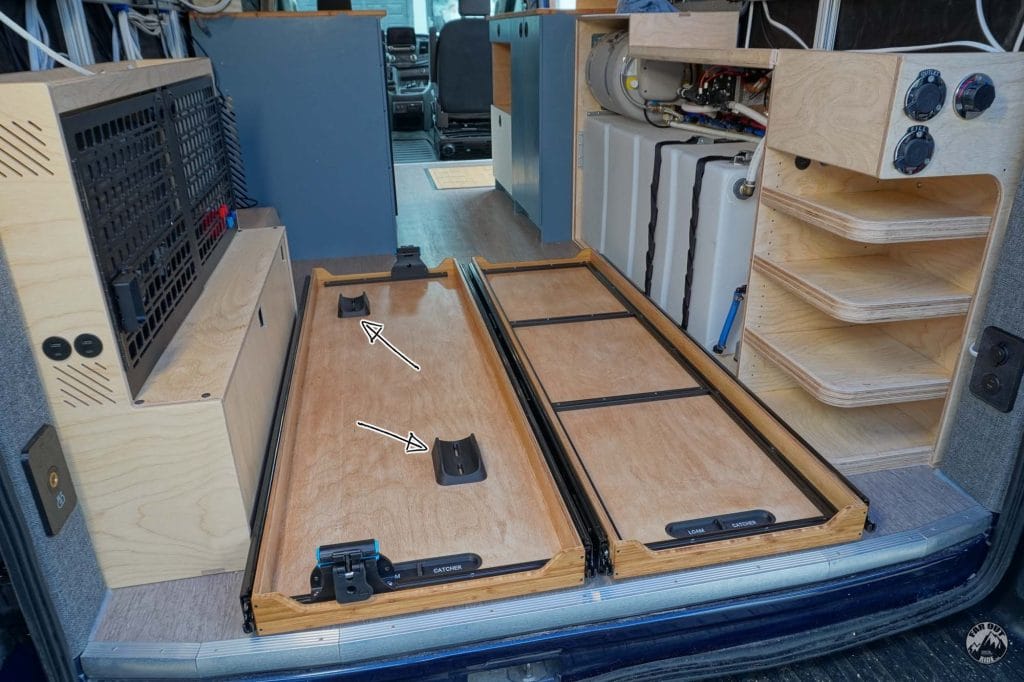
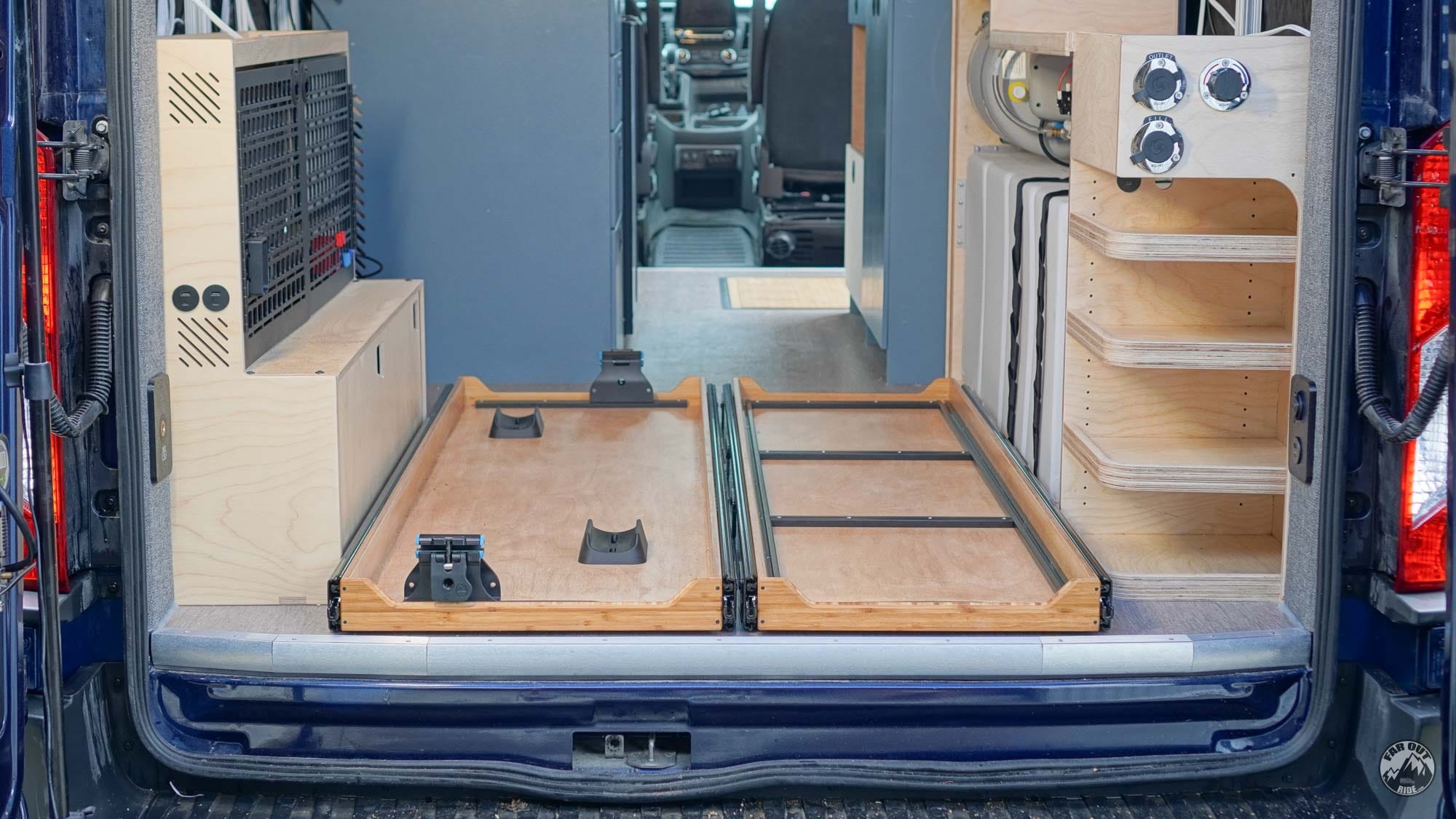
We also made supports for the rear wheel, so we don’t have to search for the correct location each time. They’re still loose at the moment, but they’ll be fastened with 2x #10 x 5/8″ pan head screws eventually:
On Second Thought…
Too soon!